Cart
0
The Part Nobody Warns You About
Most people assume replacing a car battery is a five-minute job. Disconnect two terminals, lift out the old battery, drop in the new one, done. And honestly? That's mostly true. But the drivers who run into trouble aren't stumped by the swap itself — they're caught off guard by a dead radio preset, a transmission that shifts strangely for a day, or an idle that hunts and surges because the engine control module lost its learned settings. That's the memory-reset issue, and it's worth knowing about before you start, not after.
Here's the full picture: what to check, what to grab, how to do the swap safely, and what to expect when you turn the key for the first time on a fresh battery.
Step 1: Confirm Your Battery Spec Before You Buy
This is where most DIY battery jobs go sideways. You order a battery that looks right, it fits the tray, and then the terminals are on the wrong side — or the cold cranking amps are too low for your climate, and you're back to square one in January.
Your owner's manual is the authoritative source for the correct group size and minimum CCA (cold cranking amps) rating for your vehicle. Group size tells you the battery's physical dimensions and terminal placement. CCA tells you how much starting power it delivers in cold conditions. Both numbers need to match your car's spec, not just be "close enough."
If you don't have the manual handy, the old battery itself has a label with its group size printed on it — that's a reliable starting point. You can also use a vehicle fitment tool on a parts site to cross-reference your year, make, model, and engine size. If you've been shopping for replacement parts online before, you already know the drill — the same fitment logic that applies to other components applies here. Our guide on how to buy replacement auto parts online without getting the wrong fit covers that process in more detail if you want a refresher.
Step 2: Gather What You Actually Need
You don't need a full garage setup, but you do need a few specific things. Going in without them turns a 20-minute job into a frustrating afternoon.
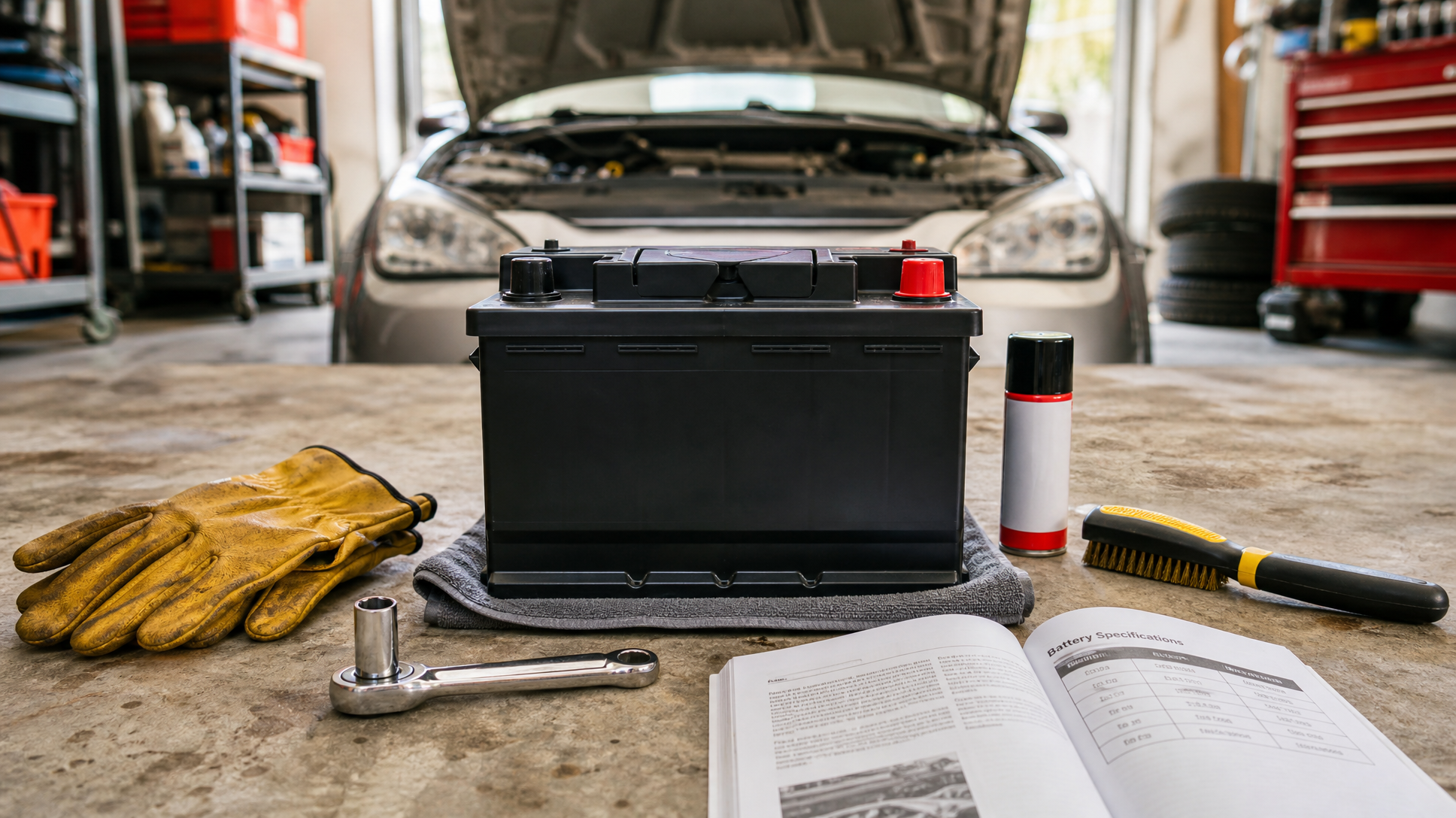
- A wrench or socket set — typically 10mm for most battery terminal bolts, though this varies by vehicle. Check before you start.
- Battery terminal cleaner or a wire brush — corrosion on the terminals is common and worth cleaning off while everything is apart.
- Battery terminal protector spray or felt washers — applied after installation to slow future corrosion buildup.
- Gloves and safety glasses — car batteries contain sulfuric acid. This isn't optional.
- A memory saver (optional but smart) — a small device that plugs into your OBD-II port or 12V outlet and maintains a trickle of power to the vehicle's electronics while the battery is disconnected. It prevents the memory reset issue entirely.
- A battery terminal puller (sometimes needed) — if the terminals are corroded or stuck, don't yank them. A puller saves you from damaging the post.
The memory saver is the one tool most guides leave off the list. If your car has a complex infotainment system, a power-folding mirror setup, or an automatic transmission with adaptive shift logic, it's worth the small investment. If you drive something older and simpler, you can skip it — just expect to re-enter your radio presets.
Step 3: Do the Swap Safely
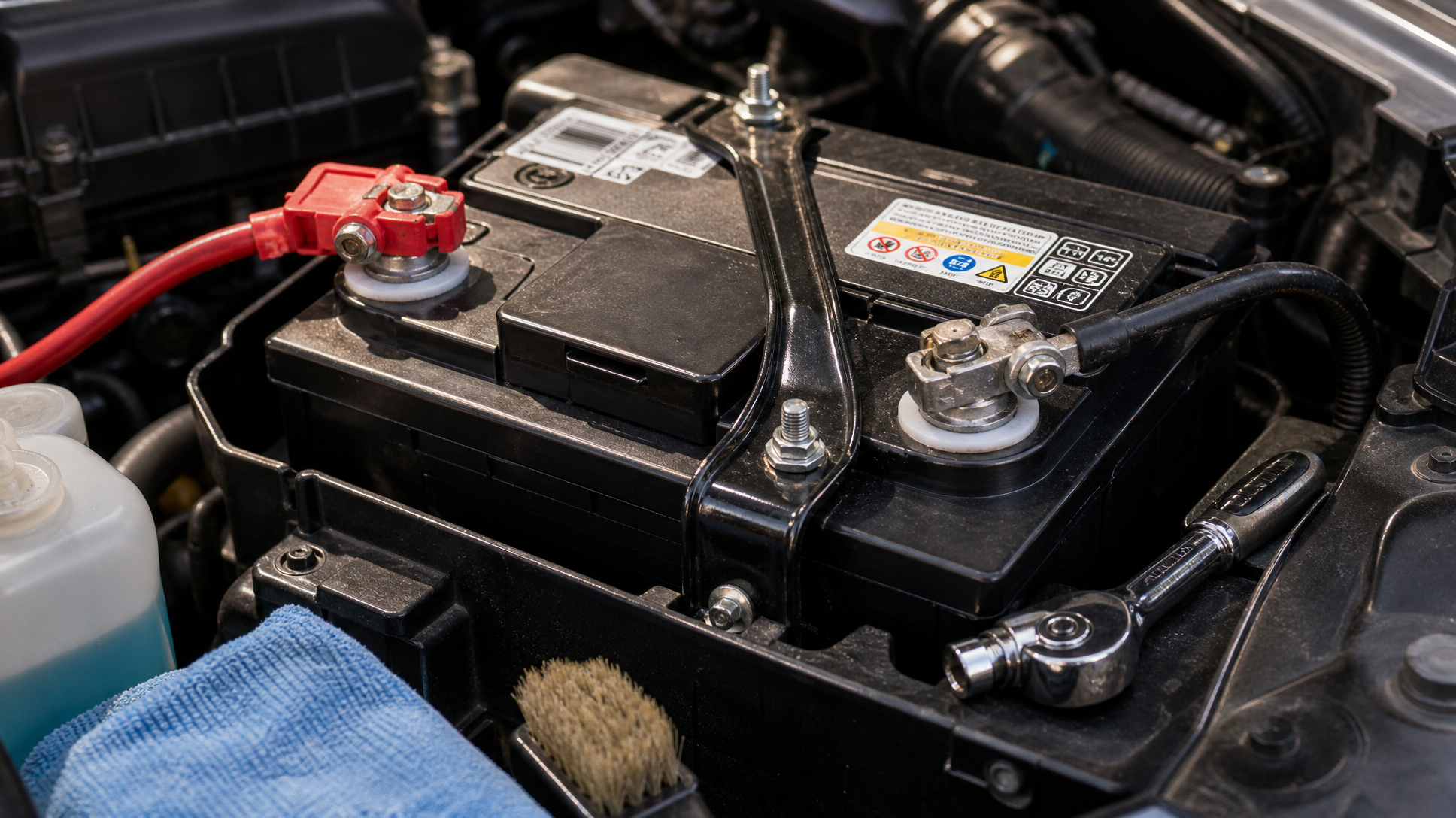
Park on a flat surface, turn the engine off, and let it sit for a few minutes. Pop the hood and locate the battery — in most passenger cars it's in the engine bay, though some models (certain BMWs and Volvos, for example) put it in the trunk or under a rear seat.
Always disconnect the negative terminal first. This is the one with the minus (–) symbol and typically a black cable. Disconnecting negative first breaks the circuit and prevents accidental sparks if your wrench touches metal. Reconnect positive first when you install the new battery — the logic works in reverse.
- Disconnect the negative (–) cable and move it aside so it can't accidentally touch the terminal.
- Disconnect the positive (+) cable.
- Remove the battery hold-down bracket or clamp — this is usually one bolt or a small bar across the base of the battery.
- Lift out the old battery. Car batteries are heavy. Use both hands and lift with your legs, not your back.
- Inspect the battery tray for corrosion or damage. Clean it if needed before the new battery goes in.
- Set the new battery in the tray, making sure the positive and negative terminals line up with the correct cables.
- Reinstall the hold-down bracket — a battery that isn't secured will vibrate and fail faster.
- Connect the positive (+) cable first, then the negative (–). Tighten both firmly; a loose terminal connection causes all sorts of electrical gremlins.
- Apply terminal protector spray or felt washers around the posts.
Step 4: The First Start and What to Expect
Turn the key (or press the start button) and let the engine idle for a few minutes. It should start cleanly — if it cranks slowly or struggles, double-check that both terminals are tight and making solid contact.
If you didn't use a memory saver, here's what's normal in the next day or two:
- Radio presets are gone. Re-enter them manually.
- The idle may feel rough or hunt at first. The ECU is relearning its idle parameters. Drive normally and it typically settles within a few drive cycles.
- Automatic transmission may shift differently. Again, this is the TCU relearning. It usually resolves on its own after some highway driving.
- Power windows may need to be reset. Some vehicles require you to hold the window switch down for a few seconds after the glass reaches the bottom, then hold it up — this re-initializes the one-touch function.
None of these are signs something went wrong. They're just the car recalibrating to a fresh power supply.
Step 5: Dispose of the Old Battery Correctly
Don't put it in the trash. Car batteries are classified as hazardous waste because of the lead plates and sulfuric acid inside. The good news is that they're almost universally accepted for recycling — most auto parts stores will take your old battery for free when you bring in a new one, and many retailers charge a core deposit that gets refunded when you return the old unit.
The EPA notes that lead-acid batteries are one of the most successfully recycled consumer products in the United States, with a very high recycling rate. Dropping it off at a parts store or a battery retailer is genuinely the easiest disposal option available.
One Last Thing
A car battery replacement is one of those jobs where being prepared takes longer than the actual work. Spend five minutes confirming your spec, pull together the right tools, and the swap itself is genuinely quick. Skip the prep, and you're making an extra trip to the store or Googling why your transmission feels weird.
Ready to get the tools together? Shop battery tools and maintenance supplies at Carkart — free shipping across the USA. Use code WELCOME5 for 5% off your first order.
Frequently Asked Questions
How do I know what battery group size my car needs?
Check your owner's manual first — it lists the exact group size and minimum CCA rating for your vehicle. Alternatively, look at the label on your existing battery, which should have the group size printed on it. You can also use a vehicle fitment tool on an auto parts site by entering your year, make, model, and engine size.
What happens if I don't use a memory saver when replacing my battery?
The vehicle's electronic control modules lose their stored settings when power is cut. In practice, this means your radio presets disappear, the engine idle may feel rough for a day or two while the ECU relearns, and your automatic transmission might shift differently until the TCU recalibrates. None of this is permanent — it resolves within a few normal drive cycles — but a memory saver prevents all of it if you'd rather avoid the hassle.
Is it safe to replace a car battery yourself, or should I go to a mechanic?
For the vast majority of passenger cars and trucks, a battery swap is a straightforward DIY job that requires only basic hand tools. The main safety precautions are wearing gloves and eye protection (batteries contain sulfuric acid), disconnecting the negative terminal first, and securing the hold-down bracket properly. If your battery is located in an unusual spot — under a rear seat or in the trunk, for example — check your owner's manual for any additional steps before you start.
Where can I recycle my old car battery?
Most auto parts stores accept old car batteries for free recycling, and many apply a core deposit refund when you return the old unit. Retailers that sell batteries are often legally required to accept them back in many states. You can also check with your local household hazardous waste facility. Never put a car battery in regular trash or recycling bins — the lead and acid make it hazardous waste.