Cart
0
You've been burned before. You ordered a part that looked right, the listing said it was compatible, and then the box showed up with something that clearly wasn't going to fit your vehicle. Or maybe the part was fine, but it took three weeks to arrive and the return process was a wall of fine print. Either way, you lost time and money — and that's the real cost of picking the wrong online auto parts store.
With dozens of retailers competing for the same search terms, they all start to look the same. Free shipping banners, bold pricing, wide catalogs. The difference only shows up when something goes wrong — or when it quietly goes right. Here's how to tell them apart before you commit.
1. Catalog Depth: Does It Actually Cover Your Vehicle?
A wide catalog isn't just a marketing number. It matters because the more SKUs a retailer carries, the less likely you are to hit a dead end mid-project. A store that stocks replacement parts, accessories, performance upgrades, and maintenance consumables all in one place saves you from splitting an order across three different sites — each with its own shipping timeline and return policy.
What to look for: Can you find both the common stuff (filters, fluids, wipers) and the harder-to-find items (specific electrical components, specialty lighting)? If a store only carries the top-selling items in each category, you'll eventually hit a gap. A retailer with genuine depth covers the long tail — the parts that aren't on every shelf but are exactly what you need when you need them.
2. Fitment Tools: The Single Biggest Source of Ordering Mistakes
The most common reason a part doesn't fit isn't that the retailer shipped the wrong item — it's that the listing wasn't specific enough to begin with. A reliable store makes fitment verification easy, not something you have to figure out yourself.
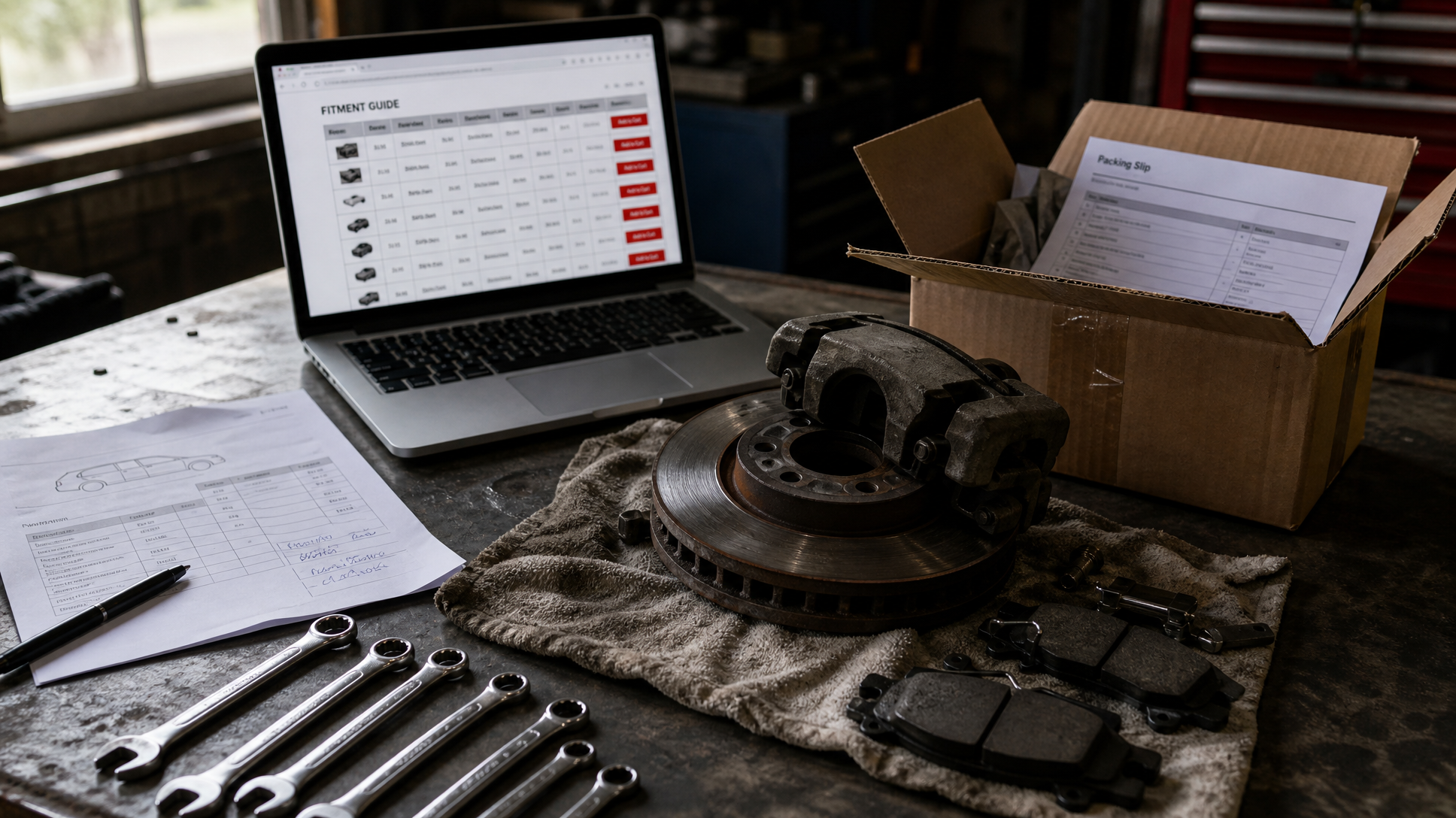
Look for a year/make/model selector that actually filters the catalog to your vehicle, not just a search bar that returns vaguely related results. The best stores also display compatibility notes directly on the product page — things like trim level differences, engine size variants, or whether a part requires an adapter. If you have to open a new tab and cross-reference a forum to confirm compatibility, that's a gap in the retailer's catalog management, and it's your time paying for it.
If you've dealt with fitment issues in the past, our guide on how to buy replacement auto parts online without getting the wrong fit walks through how to verify compatibility step by step before you add anything to your cart.
3. Shipping Transparency: What the Fine Print Actually Says
"Fast shipping" is on every site. What you actually want to know is: when does it ship, from where, and what happens if it doesn't arrive on time?
A trustworthy retailer gives you a realistic estimated delivery window at checkout — not just a carrier name. They tell you whether an item ships from a single warehouse or from a network of fulfillment centers (which affects transit time significantly for large or heavy parts). And they're upfront about which items are in stock versus drop-shipped from a supplier, because those two things have very different lead times.
The stores that hide this information — burying it in FAQs or only revealing it after purchase — are the ones that generate the most negative reviews. Before you buy anything, find the shipping policy page and read it. If it takes more than two minutes to understand what you're actually agreeing to, that's a signal.
4. Return Policy Language: Read It Like a Contract
Return policies are where a lot of online auto parts retailers show their hand. A customer-friendly policy is easy to find, easy to read, and doesn't require you to prove the part was defective before they'll accept it back. A bad one is full of conditions — restocking fees, short return windows, requirements to ship back in original packaging with all hardware intact — that make returning anything a significant hassle.
Specifically, look for these things:
- Return window length. Thirty days is a reasonable minimum. Some parts take time to install, and you shouldn't have to rush.
- Who pays return shipping. For a wrong fitment caused by a listing error, the retailer should cover it. For a buyer's remorse return, paying return shipping is fair — but it should be stated clearly upfront, not discovered after the fact.
- Restocking fees. Some stores charge a percentage of the item price to restock a return. That's not inherently wrong, but it should be disclosed before purchase, not after.
- Electrical and electronic parts exceptions. Many retailers won't accept returns on installed electrical components. If you're ordering car electronics or sensors, check whether the return policy applies to that category at all.
5. Pricing Transparency and Total Cost
The listed price is rarely the full story. Shipping costs, handling fees for heavy items, and the absence of any welcome discount all affect what you actually pay. A retailer that offers free shipping across the continental US removes one of the biggest hidden costs in online parts buying — and makes it easier to compare the true price against other options.
Also worth checking: does the store run any kind of loyalty or repeat-customer value? Returning customers who buy regularly deserve more than the same experience as a first-time visitor. A welcome discount on a first order is a good sign that the store is thinking about the long-term relationship, not just the single transaction.
6. Customer Support: Can You Actually Reach Someone?
This one is easy to overlook until you need it. Before you place a large order, check whether the store has a visible contact method — phone, email, or live chat — and whether their support hours are listed. A store that's hard to contact before a sale will be even harder to reach when you have a problem after one.
It's also worth looking at recent reviews specifically for post-purchase experiences. Positive reviews about product quality are useful, but reviews about how a store handled a wrong part, a delayed shipment, or a return dispute tell you a lot more about whether you'll be a happy customer six months from now.
The Short Version
A reliable online auto parts store earns your repeat business by being accurate, transparent, and easy to deal with when things don't go perfectly. Catalog depth keeps you from shopping around. Clear fitment tools prevent expensive mistakes. Honest shipping estimates and readable return policies protect you after the purchase. And fair pricing — with no surprise fees — means the price you see is close to the price you pay.
Those aren't high standards. They're the baseline. The stores that clear that bar consistently are the ones worth bookmarking.
Carkart ships free across the USA, carries a broad catalog spanning parts, electronics, detailing, and performance upgrades, and offers a 5% discount on your first order with code WELCOME5. If you're evaluating where to shop next, that's a solid place to start.
Frequently Asked Questions
How do I know if a part will actually fit my car before I buy it online?
Use the year/make/model selector on the retailer's site to filter results to your vehicle, then read the compatibility notes on the product page carefully — especially if your car has multiple trim levels or engine options. When in doubt, note the part number from your existing component and search for an exact match, or contact the retailer's support team before ordering.
What should I look for in an online auto parts return policy?
Check the return window (thirty days is a reasonable minimum), whether return shipping is covered for fitment errors, whether restocking fees apply, and whether the policy covers the specific category you're buying from — electrical and electronic parts often have different rules than mechanical components. Read the policy page before you buy, not after.
Is free shipping on auto parts actually free, or are there hidden fees?
It depends on the retailer. Some offer free standard shipping on all orders, while others apply it only above a minimum order value or exclude heavy and oversized items. Always check the shipping policy page for exceptions — particularly for large parts, batteries, or items shipped from supplier warehouses — before assuming free shipping applies to your order.
Are OEM parts better than aftermarket parts for everyday repairs?
OEM (Original Equipment Manufacturer) parts are made to the exact spec of what came on your vehicle from the factory, which can matter for warranty coverage or very precise fits. Quality aftermarket parts from reputable manufacturers are often a practical and cost-effective alternative for most maintenance and repair jobs. The right choice depends on the part type, your vehicle's age, and whether you're prioritizing exact-spec fit or value.