Cart
0
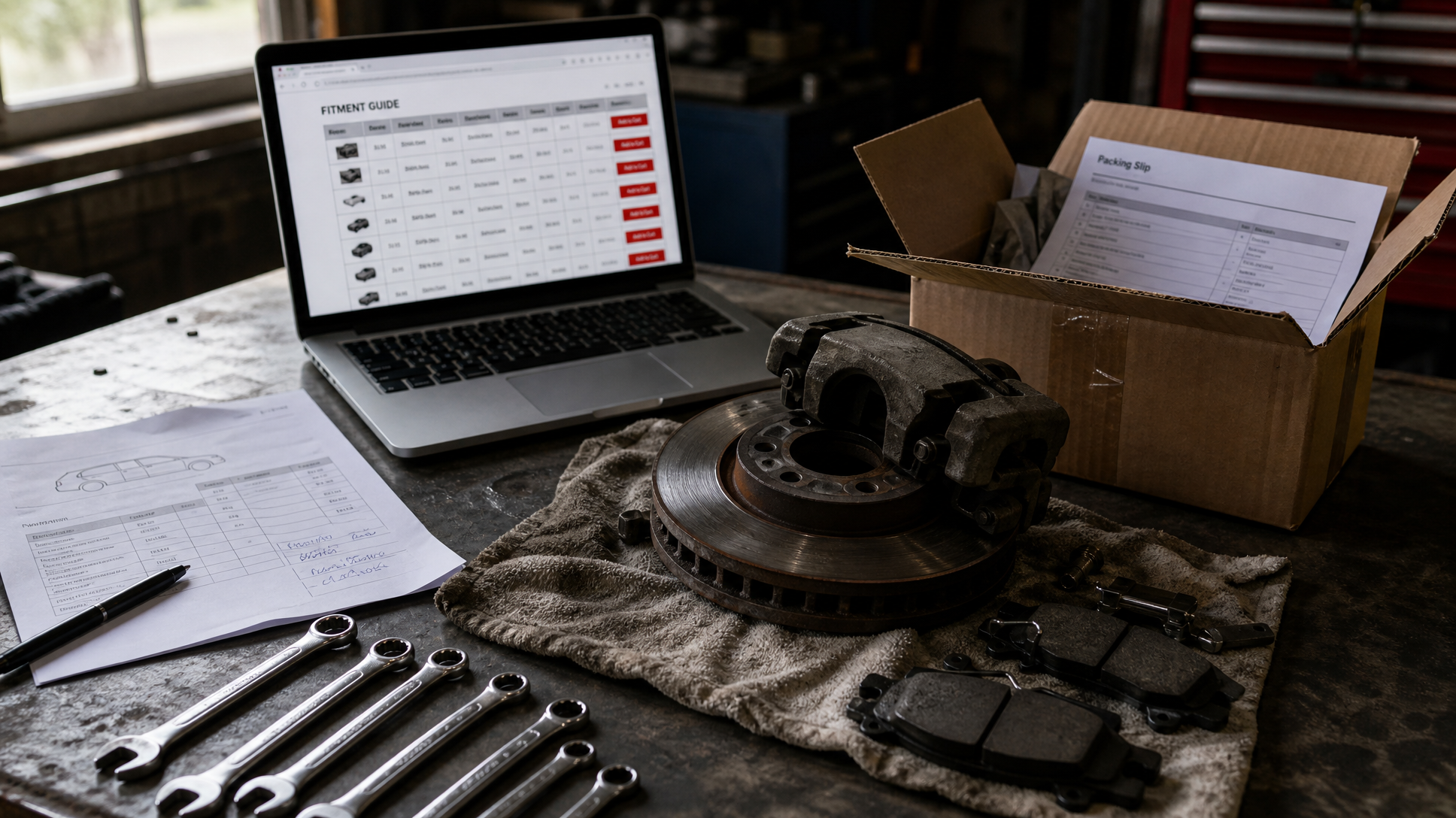
You've already got the car on jack stands. The old part is off. And then the new one doesn't fit — not because you bought cheap, but because you ordered for a 2.4L when your car has a 2.5L. Same model, same year, different engine code. The part goes back, the repair stalls, and you're out a week of waiting.
This is the most common DIY parts mistake, and it has nothing to do with quality. It's a fitment problem, and it's almost always preventable if you know what to look for before you click "add to cart."
Start With Your VIN — Every Time
Your Vehicle Identification Number is a 17-character code that encodes your car's exact factory specifications: the plant it was built in, the engine it left with, the trim level, the model year, and more. It's not just a serial number — it's the most precise identifier your car has, and it's the one thing that cuts through the ambiguity of "will this fit my car?"
You'll find it in a few places: on the driver's side dashboard (visible through the windshield), on the sticker inside the driver's door jamb, or on your registration and insurance documents. When you're shopping for parts online, use the VIN rather than relying on memory or the general year/make/model filter alone.
The National Highway Traffic Safety Administration (NHTSA) maintains a free VIN decoder tool that breaks down what each segment of your VIN means — worth bookmarking if you do any volume of DIY work.
Why "Same Year, Same Model" Isn't Enough
Automakers frequently run multiple engine variants, transmission options, and trim packages within a single model year. A 2018 Civic, for example, came with several different engine options and body styles. A brake rotor, an oxygen sensor, or a motor mount that fits one variant may not bolt onto another — even if the part number looks similar and the listing says "2018 Civic."
The details that actually matter when cross-referencing fitment:
- Engine displacement and configuration (e.g., 2.0L vs. 2.5L, turbocharged vs. naturally aspirated)
- Trim level (base, Sport, EX, Touring — these can affect suspension components, brakes, electronics)
- Transmission type (manual vs. automatic affects certain drivetrain and clutch-adjacent parts)
- Production date range (mid-year refreshes happen — some 2019 models share parts with 2020, some don't)
- Drive configuration (FWD, RWD, AWD — critical for axles, differentials, and driveshafts)
If a listing doesn't let you filter by at least engine and trim, treat it as incomplete information and dig deeper before buying.
How to Actually Read a Fitment Table
Good parts listings include a fitment table — a grid that specifies exactly which year, make, model, submodel, and engine the part is confirmed to fit. Here's how to use one properly:
First, match your exact engine code, not just the displacement. A "2.0L" can refer to several different engines across a manufacturer's lineup, and the codes (like B20B or LFX) are what engineers actually use to distinguish them. Your owner's manual or a quick VIN decode will surface this.
Second, check the notes column. Fitment tables often include asterisks or footnotes — "fits vehicles built after [date]" or "does not apply to Sport trim" — that aren't visible until you scroll or expand the table. These are the details that save you a return shipment.
Third, if the table doesn't list your specific submodel, don't assume it fits. Contact the seller or check a verified forum thread from owners of your exact configuration. Assumption is expensive.
When "Universal Fit" Is Legitimate (and When It Isn't)
"Universal fit" is not inherently a red flag — but it needs context. Some parts genuinely don't require vehicle-specific engineering: certain seat covers, phone mounts, floor mat sets, and basic tools are legitimately universal. The claim makes sense when the part doesn't interface with vehicle-specific mounting points, electrical connectors, or fluid systems.
It becomes a problem when you see "universal fit" on parts that very much do require specific fitment: exhaust components, sensors, control arms, brake hardware, or anything that bolts into a chassis or plugs into a vehicle-specific harness. In those cases, "universal" usually means "requires modification" or "may not fit without fabrication" — and that's information you need upfront, not after the box is open.
A legitimate universal exhaust tip or a set of universal-fit mud flaps with included hardware is fine. A "universal" O2 sensor or a "universal" strut mount is a project, not a drop-in replacement.
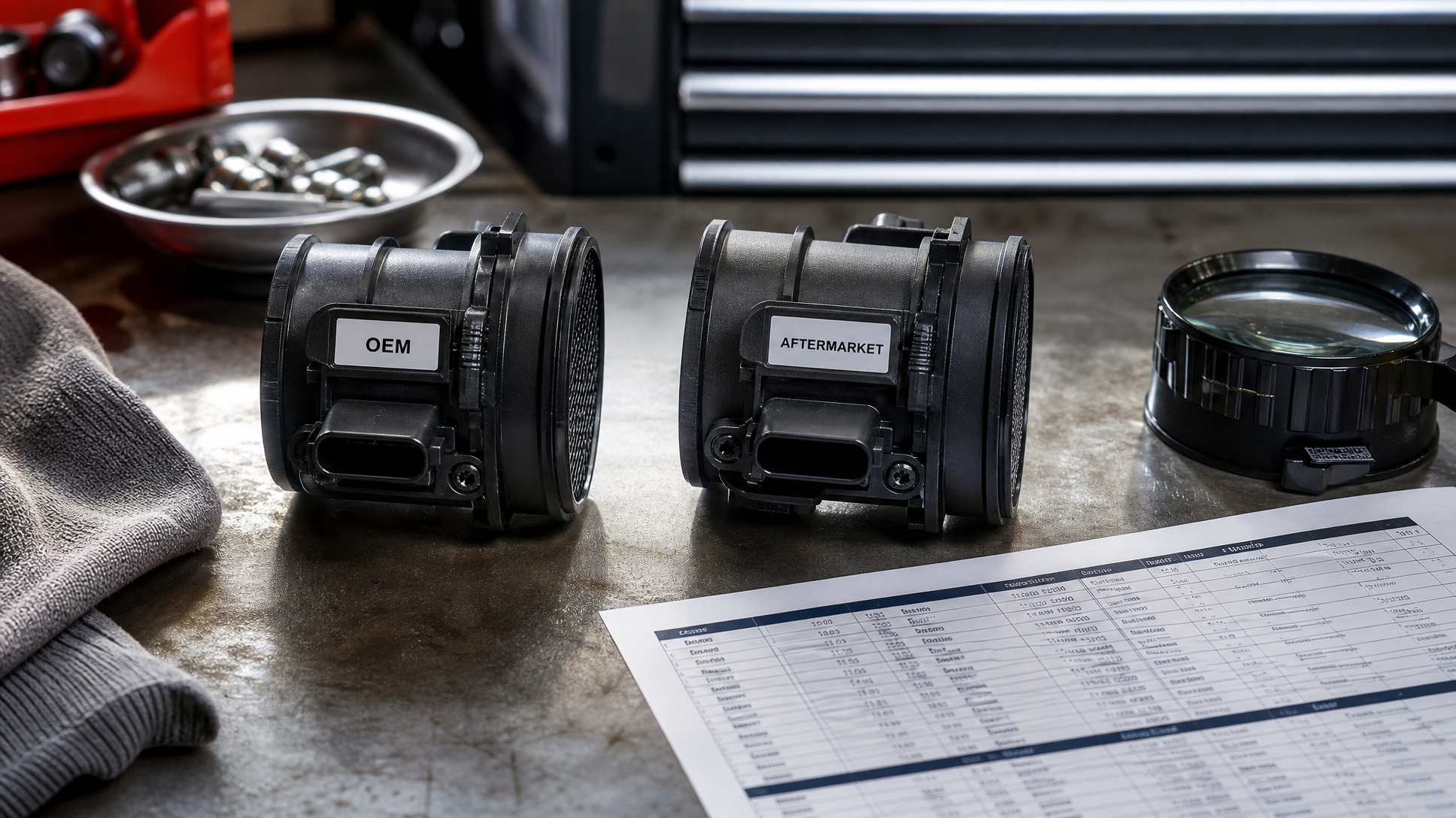
OEM vs. Aftermarket: The Honest Trade-Off
OEM (Original Equipment Manufacturer) parts are made to the exact spec your car left the factory with. They're the safest fitment bet and typically come with a manufacturer warranty — but they carry a price premium, and for many repairs, they're not necessary.
Quality aftermarket parts from reputable brands often meet or exceed OEM specs and cost less. The key word is reputable. For commodity items like filters, belts, and rotors, a well-reviewed aftermarket option from a known brand is a reasonable choice. For safety-critical components — airbag modules, ABS sensors, steering components — lean toward OEM or a Tier 1 supplier whose parts are tested to the same standards.
The mistake isn't choosing aftermarket. It's choosing the cheapest unknown-brand listing without checking reviews, return policies, or whether the part comes with any warranty at all.
What to Do When a Part Arrives and Doesn't Fit
Even when you do everything right, mismatches happen. Here's the fastest path through it:
- Don't install it. The moment you install a part, most return windows close or complicate significantly. If something looks off, compare it to the old part before touching a bolt.
- Document everything. Photograph the part, the packaging, the part number on the box, and the part number on the component itself. This protects you in a return or warranty claim.
- Cross-reference the part number. Sometimes the right part ships in a box labeled with a different SKU. Look up the actual part number stamped or printed on the component itself and verify it against your vehicle's service manual or a parts database.
- Contact the seller before assuming it's wrong. Occasionally fitment tables have errors, and a seller who stands behind their listings will either confirm the fit or expedite a replacement. A seller who goes quiet is a seller to avoid next time.
If you're buying from a retailer with a clear return policy and fitment guarantee, you're in a much better position than if you bought from a marketplace listing with no accountability. Check the return window and restocking fee policy before you order — not after.
Build a Parts-Shopping Checklist You Actually Use
The DIY enthusiasts who rarely buy the wrong part aren't necessarily more knowledgeable — they're more systematic. Before any parts order, run through this:
- VIN decoded and engine code confirmed
- Trim level and production date noted
- Fitment table reviewed, including notes and footnotes
- Part number cross-referenced with at least one other source (owner forum, service manual)
- "Universal" claim evaluated against what the part actually interfaces with
- Return policy and restocking fee reviewed
Five minutes of verification before checkout beats two weeks of return shipping and a stalled project.
If you want to browse replacement and performance parts with clear fitment details, Carkart's catalog covers everything from maintenance staples to enthusiast upgrades. First order? Use code WELCOME5 at checkout for 5% off — and take the time to verify fitment before you confirm the order. That's the move.
And if you're newer to buying parts online and want a broader walkthrough of the process, this guide on buying replacement auto parts online without getting the wrong fit covers the full picture.
Frequently Asked Questions
Where do I find my VIN and what does it actually tell me?
Your VIN is a 17-character code located on the driver's side dashboard (visible through the windshield from outside the car), on the sticker inside the driver's door jamb, and on your registration and insurance documents. It encodes your vehicle's exact factory specs — including engine type, trim configuration, and model year — which is why it's more reliable than searching by year/make/model alone when shopping for parts.
What's the difference between OEM and aftermarket parts, and which should I buy?
OEM parts are made to the exact factory specification your vehicle was built with — safest for fitment, but typically more expensive. Aftermarket parts from reputable brands often match or exceed OEM quality at a lower price point and are a reasonable choice for most repairs. For safety-critical components like ABS sensors, steering parts, or airbag hardware, it's worth spending more on OEM or a well-known Tier 1 supplier. For routine items like filters, belts, or rotors, a quality aftermarket option works well.
Is a "universal fit" part ever actually universal?
Yes — for parts that don't need to interface with vehicle-specific mounting points, connectors, or fluid systems, universal fit is a legitimate and useful category. Seat covers, basic phone mounts, and certain floor mat sets are genuinely universal. The problem is when sellers label fitment-critical parts — sensors, exhaust components, control arms — as "universal," which usually means they require modification to install. If a part bolts into your chassis or plugs into a vehicle-specific harness, it needs a confirmed fitment, not a universal claim.
What should I do if I receive a part that doesn't fit?
Don't install it. Most return windows close or become complicated once a part has been installed. Compare the new part to the old one before touching any bolts, photograph the part number on both the component and the packaging, and contact the seller with that documentation. Cross-reference the actual part number stamped on the component against your vehicle's service manual or a parts database — sometimes the right part ships in packaging labeled with a different SKU. Check the seller's return policy and restocking fee terms before initiating a return.