Cart
0

The moment a mechanic says "your X needs replacing," a lot of drivers just nod and hand over the keys — not because they're lazy, but because no one ever explained what X actually does. That knowledge gap costs real money, and it's completely fixable.
You don't need to be a gearhead to understand your car's basic serviceable parts. You just need someone to explain them without the jargon. Here's that explanation — plus an honest take on which jobs you can reasonably do yourself and which ones are worth paying a professional for.
Air Filter
What it does: Every engine needs a precise mix of air and fuel to run. The air filter is the gatekeeper — it catches dust, pollen, and debris before they enter the engine. A clogged filter starves the engine of airflow, which hurts fuel economy and performance.
DIY-able? Yes, and it's one of the easiest swaps you'll make. On most cars, the filter sits in a plastic housing under the hood that unclips or unscrews in seconds. No special tools required. Check your owner's manual for the replacement interval — it's typically measured in miles driven, and your driving conditions (dusty roads, stop-and-go city driving) can shorten that window.
Oil and Oil Filter
What it does: Engine oil lubricates moving metal parts and carries heat away from the engine. The oil filter traps contaminants that accumulate in the oil over time. Old, dirty oil turns into a grinding paste — not what you want between precision-machined engine components.
DIY-able? An oil change is the classic beginner DIY job, and for good reason. You need a drain pan, a filter wrench, and the right oil and filter for your specific engine. The catch: you'll need to safely lift the car, which means a proper jack and jack stands — not just a floor jack. If you're not set up for that yet, it's still worth knowing what's happening under the hood even if you pay someone else to do it.
Cabin Air Filter
What it does: This one's separate from the engine air filter — it cleans the air that comes through your vents into the passenger cabin. A neglected cabin filter means you're breathing whatever it's been collecting: pollen, road dust, mold spores.
DIY-able? Usually yes, and it's often the easiest replacement on the whole car. On most vehicles it's behind the glove box or under the dashboard. A quick search for your year, make, and model will show you exactly where. It takes under ten minutes on a good day.
Spark Plugs
What it does: Spark plugs ignite the air-fuel mixture in each cylinder. When they wear out, the engine misfires, idles rough, and loses efficiency. You might also notice it taking longer to start on cold mornings.
DIY-able? Moderately. On a four-cylinder engine with easy access to the plugs, it's a satisfying afternoon job with a spark plug socket and a torque wrench. On a V6 or V8 where the rear bank of plugs is buried behind other components, it gets genuinely frustrating. Know your engine layout before you commit.
Battery
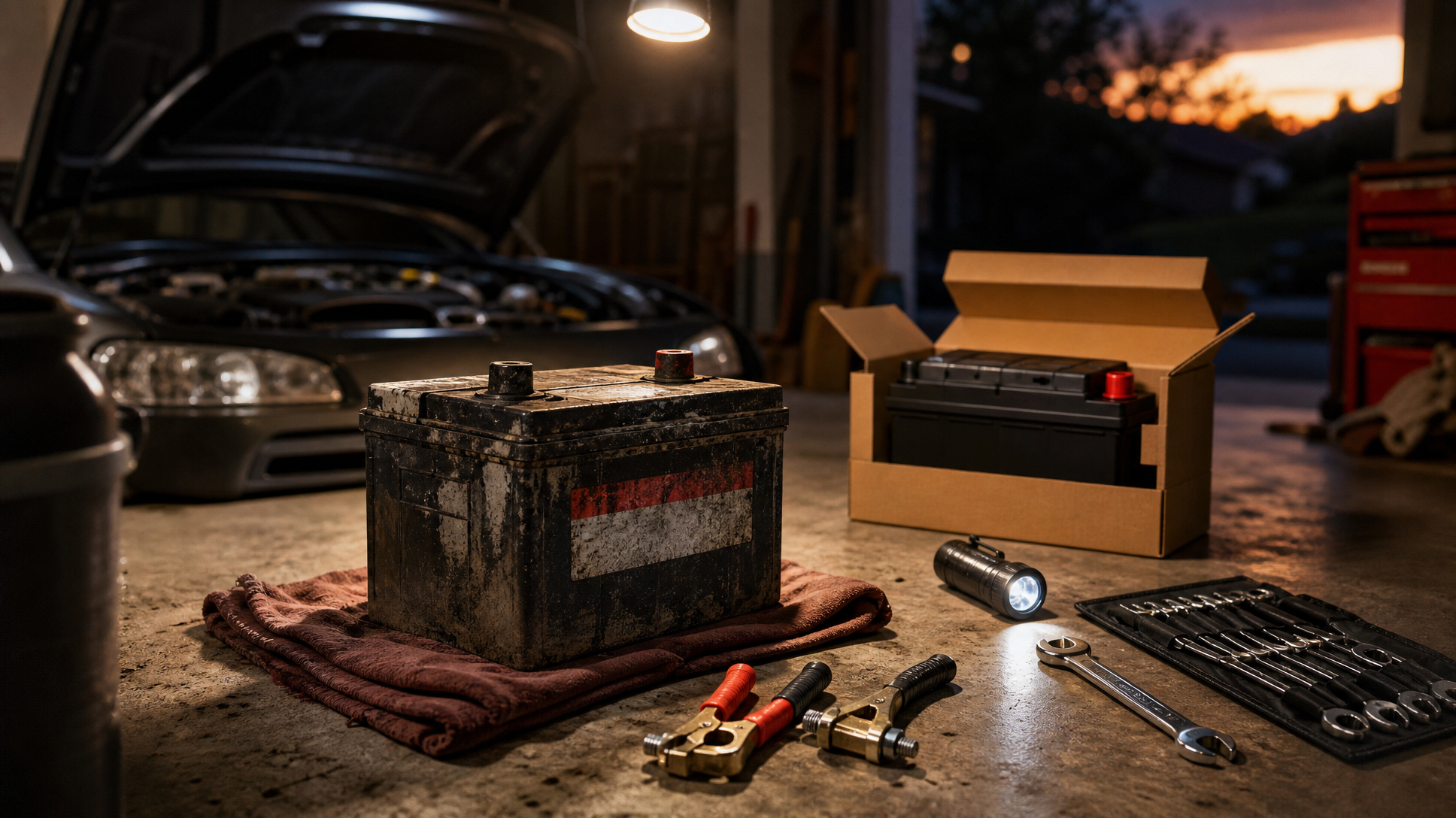
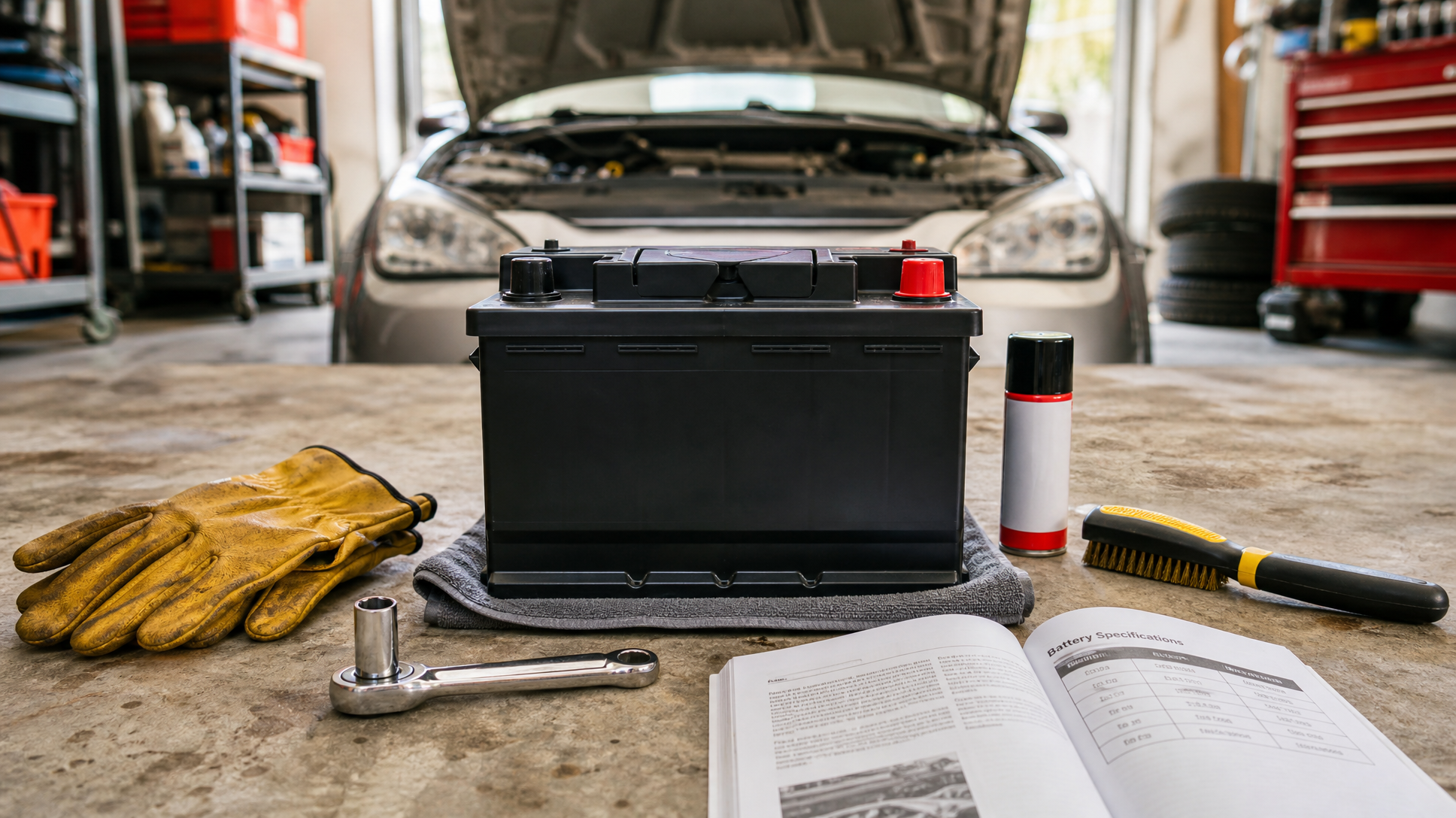
What it does: Powers the starter motor and all your car's electronics. A battery doesn't last forever — heat, cold, and age all degrade it. The warning signs are a slow crank on startup or electronics that seem sluggish.
DIY-able? Yes, with one important caveat. Disconnecting the battery on modern cars can reset stored settings (radio presets, window positions, sometimes throttle body calibration). That's not a dealbreaker, just worth knowing. The physical swap itself — loosen the terminals, lift out the old battery, drop in the new one — is simple. Get the right group size for your vehicle.
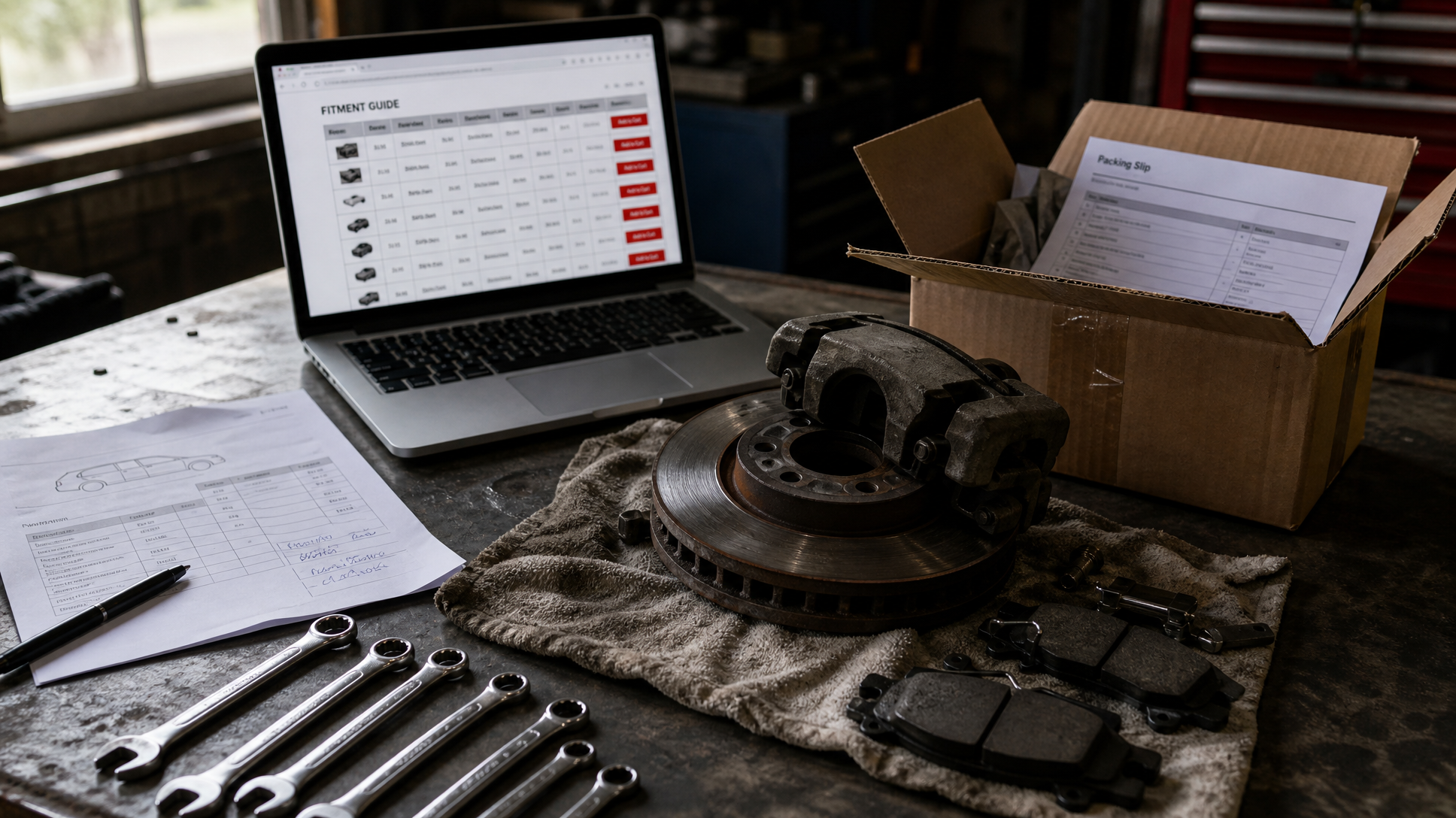
Brake Pads
What it does: Brake pads press against the rotors to slow the car. They wear down over time, and when they're gone, the metal backing grinds directly into the rotor — which is the screech or grinding noise that means you're already past due.
DIY-able? Yes, if you're comfortable with basic tools and following a procedure carefully. Pad replacement is within reach for a motivated beginner. Rotor replacement is a step up but still doable. The key is working one side at a time so you always have the other side as a reference, and never compressing the caliper piston without checking the brake fluid reservoir first.
Serpentine Belt
What it does: This single belt winds around multiple pulleys and drives your alternator, power steering pump, air conditioning compressor, and sometimes the water pump. When it snaps, those systems stop — all at once, usually at the worst possible moment.
DIY-able? Doable, but not beginner territory. The tension is held by a spring-loaded tensioner that you release with a breaker bar, and routing the new belt correctly matters. Take a photo of the old belt routing before you remove it. If you're not confident, this is a reasonable one to pay for — it's not an expensive shop job, and the consequences of getting it wrong are significant.
Coolant (Antifreeze)
What it does: Coolant circulates through the engine and radiator to manage operating temperature. It also prevents freezing in winter and corrosion inside the cooling system year-round. Old, depleted coolant loses its protective additives and can cause internal corrosion.
DIY-able? Topping off the coolant reservoir is something anyone can do — just make sure the engine is cold first. A full coolant flush is more involved and requires disposing of the old fluid properly, since it's toxic to animals. Check your local regulations on disposal before you start.
Wiper Blades
Arguably the most overlooked safety item on any car. Streaky, skipping wipers in a heavy rain are a real visibility hazard. Replacement takes about two minutes per blade — no tools, no lifting the car, no mess. There's genuinely no reason to pay someone for this one.
A Note on Fluids in General
Beyond coolant and oil, your car has transmission fluid, power steering fluid (on older vehicles), differential fluid, and brake fluid. Most of these have long service intervals and don't need frequent attention — but checking their levels and condition periodically is something every owner can do. Discolored, burnt-smelling, or gritty fluid is a signal to act.
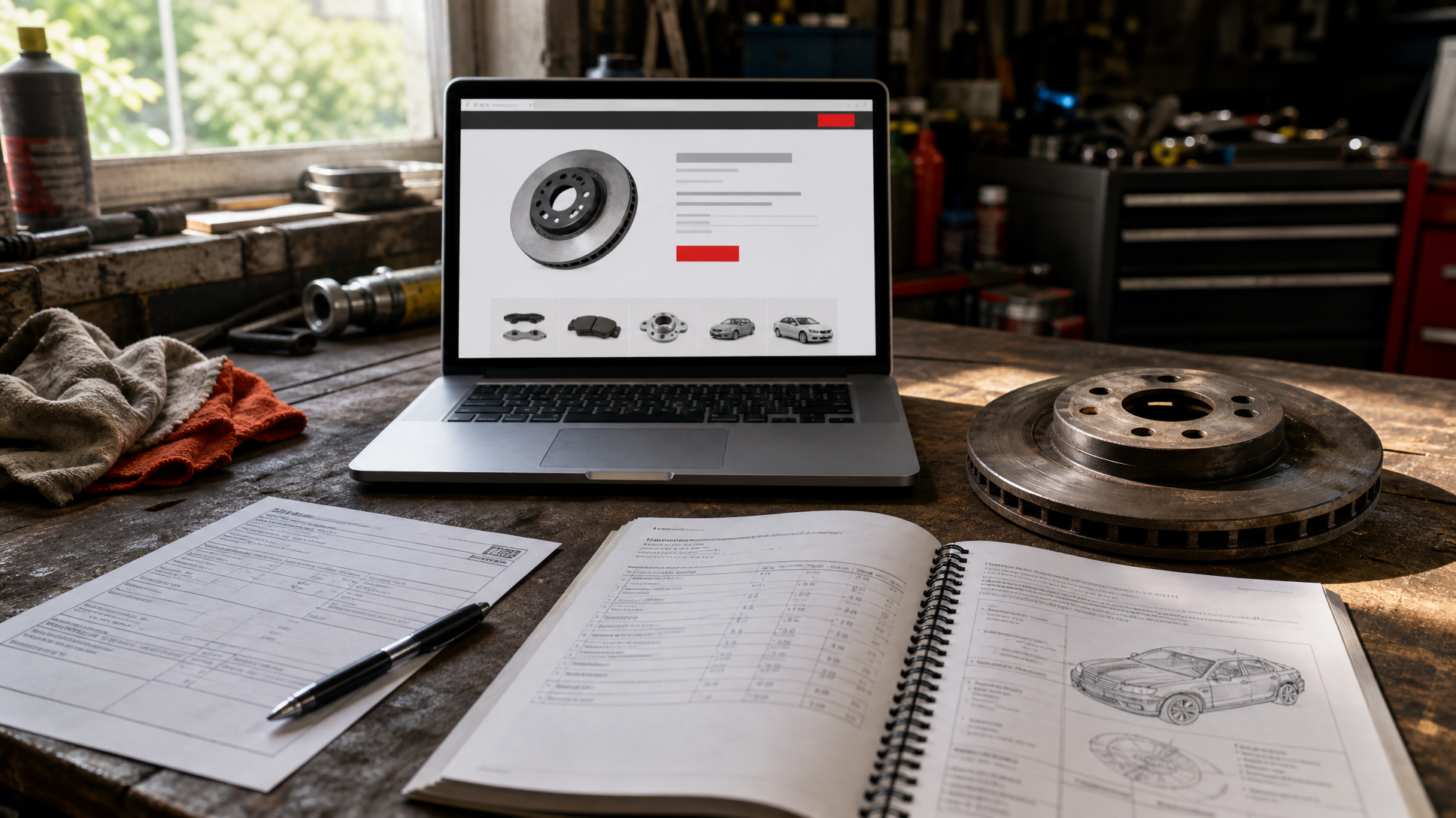
If you want to go deeper on sourcing the right components before you start, the guide on how to buy replacement auto parts online without getting the wrong fit is worth a read — getting the correct part number before you order saves a lot of frustration.
The Honest Rule of Thumb
If a job requires special tools you don't own, involves the fuel system or high-pressure hydraulics, or has safety consequences if done wrong (brakes, steering, suspension), think twice before going it alone the first time. Everything else on this list? A motivated owner with basic tools and a Saturday afternoon can handle it.
The goal isn't to become your own mechanic. It's to know enough that you're never just nodding along — and to handle the straightforward stuff yourself when it makes sense.
Find the replacement parts, filters, and fluids you need at Carkart — broad catalog, competitive pricing, and fast shipping across the USA. Use code WELCOME5 for 5% off your first order.
Frequently Asked Questions
How do I know which replacement part fits my specific car?
Always shop by your vehicle's year, make, model, and engine size — not just the part name. Most online retailers, including Carkart, let you filter by these details. When in doubt, cross-reference the part number on the component you're removing with the listing before you buy.
How often should I replace my engine air filter?
Your owner's manual will give you the manufacturer's recommended interval in miles. That said, if you drive on unpaved roads, in dusty environments, or in heavy stop-and-go traffic, the filter can clog faster than the standard interval suggests. A visual check every few months costs nothing.
Is it safe to change brake pads yourself for the first time?
Yes, if you follow a reliable procedure carefully and work methodically. The most important habits: work on one side at a time, torque the caliper bolts properly, and pump the brake pedal before you drive anywhere — the pedal will feel soft until the pads seat against the rotors. If anything feels off, have a professional inspect the work before driving on public roads.
What's the difference between engine oil and transmission fluid?
Engine oil lubricates the internal components of the engine — pistons, crankshaft, camshaft, and more. Transmission fluid lubricates the gears and clutch packs inside the transmission. They're completely separate systems with different fluid types, different service intervals, and different dipsticks (if your transmission has one at all — many modern automatics are sealed). Never mix them up.