Cart
0
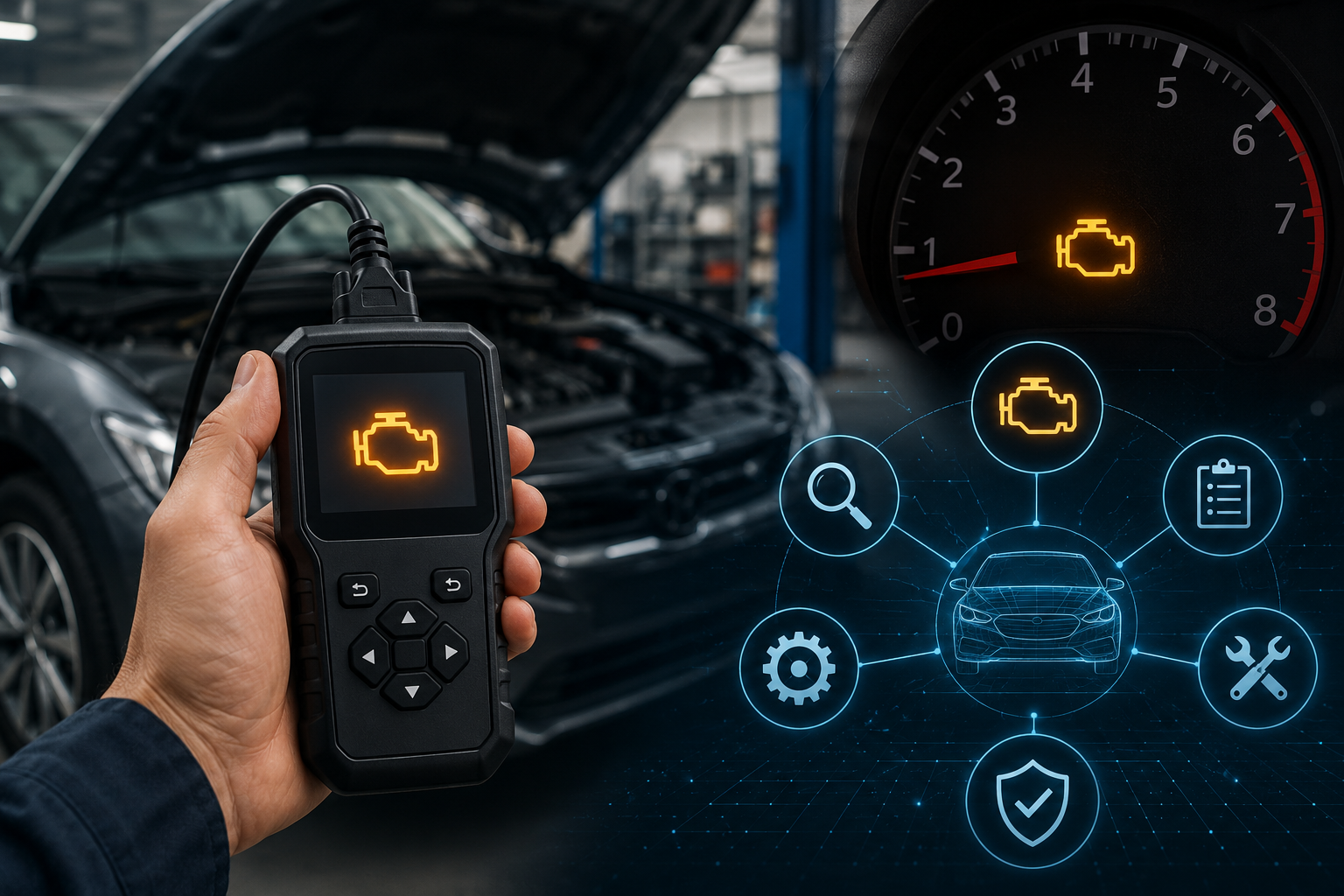
Unlock the secrets behind your vehicle’s Check Engine Light with OBD-II scan tools. Learn how to diagnose issues quickly, save money on repairs, and maintain your car’s health like a pro.
Estimated Reading Time
8 minutes
Key Takeaways
- OBD-II scan tools provide quick access to Diagnostic Trouble Codes (DTCs) revealing your vehicle's issues.
- Understanding and using scan tools empowers drivers to perform timely maintenance and avoid costly repairs.
- Not all OBD-II scanners are the same: choose one based on your vehicle type and diagnostic needs.
- For complex or severe problems, professional mechanics and advanced diagnostics remain essential.
- Electric Vehicles require specialized diagnostic tools beyond standard OBD-II scanners.
Table of Contents
- 1. Understanding OBD-II Scan Tools for Vehicle Diagnostics
- 2. Decoding Diagnostic Trouble Codes (DTCs)
- 3. Step-by-Step Guide: How to Use an OBD-II Scanner
- 4. Benefits of Using OBD-II Scan Tools: Saving Time and Money
- 5. Limitations of OBD-II Scan Tools and When to Seek Professional Help
- 6. OBD-II Scanners for Electric Vehicles (EVs)
- 7. Choosing the Right OBD-II Scanner for Your Needs
- 8. Final Thoughts: Take Charge of Your Vehicle Maintenance and Save
- FAQ
1. Understanding OBD-II Scan Tools for Vehicle Diagnostics
Seeing the Check Engine Light (CEL) illuminate can cause stress, but an OBD-II scan tool lets you quickly identify the problem. Since 1996, most U.S. vehicles include a standardized onboard diagnostic port. By plugging in an OBD-II device, you access error codes stored by your car’s Engine Control Unit (ECU), helping you separate minor glitches from serious faults. Modern scanners range from simple code readers to advanced tools offering deep diagnostics, making regular vehicle maintenance accessible and cost-effective for everyone.
For more details on OBD-II basics, visit Learn more about OBD-II basics.
2. Decoding Diagnostic Trouble Codes (DTCs)
At the heart of your OBD-II scanner are Diagnostic Trouble Codes (DTCs). Each code, for example, P0442 or P0300, follows a letter-and-number format where the letter points to the system affected, and the numbers identify the fault type. For instance, P0442 signals an evaporative emission system leak, while P0300 indicates random engine misfires. Recognizing these codes helps clarify the root cause and guides appropriate repair actions.
Explore an extensive list of codes and meanings at Explore more DTCs and their meanings.
3. Step-by-Step Guide: How to Use an OBD-II Scanner
Getting started with an OBD-II scanner is easier than you might think. Follow these simple steps:
- Locate the OBD-II Port: Usually found under the dashboard near the steering column, it has a trapezoidal shape designed for your scanner.
- Connect the Scanner: Plug your tool into the port carefully. Wireless scanners connect via Bluetooth or Wi-Fi to your phone or tablet.
- Turn Ignition ON: Switch the ignition to the ON position without starting the engine to power the vehicle’s electronic systems.
- Read Codes: Follow your scanner’s instructions to scan; reading codes usually takes from 30 seconds to a few minutes.
- Interpret Results: Most scanners offer brief descriptions. For detailed explanations, consult online resources or apps.
- Take Necessary Action: Decide if you can fix the issue yourself, like tightening a loose gas cap, or if you need professional help. Avoid simply clearing codes without repair as issues may recur.
For a thorough walkthrough, check out Read detailed usage tips.
4. Benefits of Using OBD-II Scan Tools: Saving Time and Money
OBD-II scanners are more than diagnostic gadgets—they’re tools for smarter car care. Here’s how they help:
- Early Issue Detection: Catch problems early to prevent costly repairs and breakdowns.
- Prioritizing Repairs: Know which issues to fix immediately and which can wait, minimizing downtime.
- Preventing Unnecessary Repairs: Avoid replacing parts prematurely by confirming faults with precise data.
- Fleet Management Savings: Companies managing multiple vehicles report thousands of dollars saved by effective scanning. For example, a Grand Rapids, MI company saved $4,000 in diagnostic fees by targeting vans needing urgent repairs.
- Empowering Consumers: Drivers equipped with code data communicate more confidently with mechanics, leading to better service and decisions.
- Enhancing Safety and Reliability: Regular checks help maintain safe vehicle operation for all road users.
"Ervine’s Auto Repair in Michigan credit their efficient diagnostics using OBD-II scanners for avoiding needless part replacements and improving customer satisfaction."
Learn about more ways tools save money at Discover cost-saving benefits.
5. Limitations of OBD-II Scan Tools and When to Seek Professional Help
While invaluable, OBD-II scanners have limits that warrant attention:
Important Limitations:
- Diagnostics Scope: Basic scanners focus mainly on engine and emissions; they may not cover ABS brakes, airbags, or other specialized systems.
- Code Interpretation: Codes point to symptoms, not exact causes. For example, misfire codes often require thorough mechanical inspection beyond the scan.
- Resetting vs Repairing: Clearing codes without fixing the underlying issue can mask problems and cause repeated warning lights.
- Flashing Check Engine Light: Indicates serious faults like engine misfire – immediate professional attention is critical.
- EV and Advanced Systems: Electric Vehicles have unique diagnostics needing specialized tools and expertise.
In complex scenarios or persistent faults, trust certified mechanics equipped with advanced diagnostics to ensure accurate repairs.
6. OBD-II Scanners for Electric Vehicles (EVs)
The rise of Electric Vehicles shifts traditional diagnostics. EVs lack combustion engines, so their fault indicators differ, and not all OBD-II scanners function correctly with them. Instead, EVs employ dedicated diagnostics targeting battery systems, brakes, and tire monitoring systems. Always follow the manufacturer’s recommended diagnostic tools and seek expert assistance for EV maintenance to ensure vehicle longevity and safety.
7. Choosing the Right OBD-II Scanner for Your Needs
Selecting the best scanner depends on your vehicle and comfort level with diagnostics:
- Basic Code Readers ($20 to $50): Perfect for everyday drivers seeking simple fault detection and resets.
- Mid-Range Wireless Scanners ($50 to $150): Connect to smartphones or tablets offering enhanced diagnostics and live data streaming.
- Professional-Grade Tools ($100+): Designed for mechanics and fleet operators, these provide deep diagnostics including live sensor data and manufacturer-specific codes.
Key considerations include compatibility with your vehicle, ease of use, wireless options, and feature sets. Many auto parts retailers also offer rental programs to test tools before purchase.
8. Final Thoughts: Take Charge of Your Vehicle Maintenance and Save
OBD-II scan tools empower you to decode what your car’s Check Engine Light is signaling, helping you maintain peak performance while avoiding costly surprises. User-friendly and affordable scanners put vital information at your fingertips. However, remember these tools supplement professional expertise—they don’t replace it entirely. Act promptly on warnings, especially if lights flash, and consult a qualified mechanic when needed.
Stay proactive, stay informed, and drive confidently knowing you understand your vehicle better with OBD-II diagnostics.
FAQ
What is an OBD-II scan tool?
An OBD-II scan tool is a device that connects to your vehicle’s diagnostic port to read error codes from the engine control unit, helping identify issues related to engine, emissions, and other systems.
Can I use OBD-II scanners on any vehicle?
Most vehicles manufactured in the U.S. from 1996 onwards come with a standardized OBD-II port compatible with scan tools. However, Electric Vehicles require specialized diagnostic tools.
What should I do if the check engine light is flashing?
A flashing Check Engine Light usually indicates a severe problem like an engine misfire. You should stop driving and seek immediate professional assistance to avoid damage.
Is it safe to clear codes with a scanner?
Clearing codes without fixing the underlying issue may temporarily turn off the warning light but does not solve the problem and can lead to recurring faults.
Where can I buy or rent OBD-II scanners?
OBD-II scanners are widely available at auto parts stores, online retailers, and some local shops offer them for rent to try before buying.