Cart
0
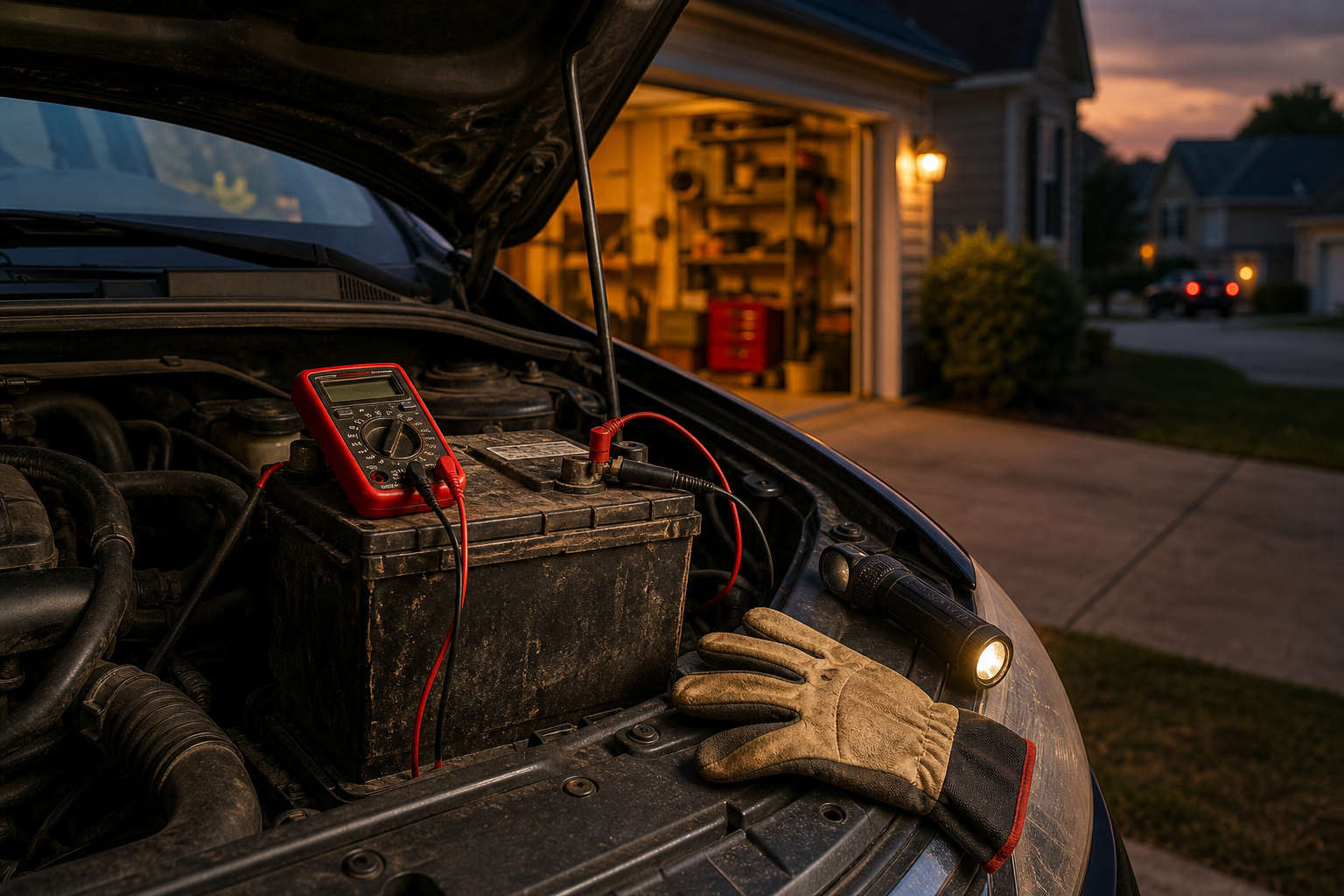
It never happens at a convenient time. It's always a Tuesday morning when you're already late, or a parking lot in the rain, or — somehow — both. You turn the key and get nothing but a click, or a slow, labored crank that goes nowhere. The battery is dead.
Here's the frustrating part: it almost certainly told you it was dying. Most batteries don't go from fine to dead overnight. They fade, and that fade leaves clues. The problem is most drivers don't know what to look for until they're already calling for a jump.
This post walks you through exactly what those warning signs look like, how to do a basic battery check yourself, and what a replacement actually involves — so you can deal with it on your schedule instead of a tow truck's.
Warning Signs Your Battery Is on Its Way Out
Slow or Sluggish Engine Crank
This is the clearest early signal. When you turn the key (or press start), the engine should fire up quickly. If it sounds like it's straining — a slow, labored rrrr-rrrr-rrrr before it catches — your battery is struggling to deliver enough power. Don't ignore this. A battery that cranks slowly in the morning may not crank at all by afternoon.
The Check Engine or Battery Light Comes On
The battery warning light on your dashboard is there for a reason. If it illuminates, your charging system is flagging a problem — it could be the battery itself, the alternator, or the connection between them. A check engine light can also point to battery-related issues, especially if no other symptoms are obvious. Either way, it's worth investigating promptly.
Electrical Gremlins
Dim headlights, a radio that resets, power windows moving slower than usual, or interior lights that flicker — these are all signs your car's electrical system isn't getting consistent power. A weakening battery often shows up in the electronics before it shows up in the engine crank. If your car suddenly feels "off" electrically for no clear reason, the battery is a logical first suspect.
Swollen or Bloated Battery Case
If you pop the hood and the battery casing looks swollen, warped, or misshapen, that's a battery that's been exposed to excessive heat or has been overcharged. A bloated battery is not a battery you want to keep. It's past its useful life and can be a safety hazard.
A Rotten Egg Smell Near the Engine
A sulfurous or rotten egg smell near the battery is a sign of a leaking battery — specifically, hydrogen sulfide gas escaping from battery acid. If you smell this, handle the battery carefully and replace it soon. This isn't a "wait and see" situation.
It's Been More Than Three or Four Years
Car batteries don't last forever. Most conventional lead-acid batteries have a lifespan of roughly three to five years, depending on climate, driving habits, and how often the vehicle sits unused. If your battery is approaching or past that window and you haven't had it tested recently, it's worth checking — even if it seems fine right now. Heat accelerates battery wear significantly, so drivers in hot climates often see shorter lifespans.
How to Test Your Battery at Home
You don't need a mechanic to get a basic read on your battery's health. A multimeter (a simple, inexpensive tool) can give you a useful voltage reading in about two minutes.
- Turn the car off and let it sit for a few minutes so the surface charge dissipates.
- Set your multimeter to DC voltage — the 20V range covers a standard 12V car battery.
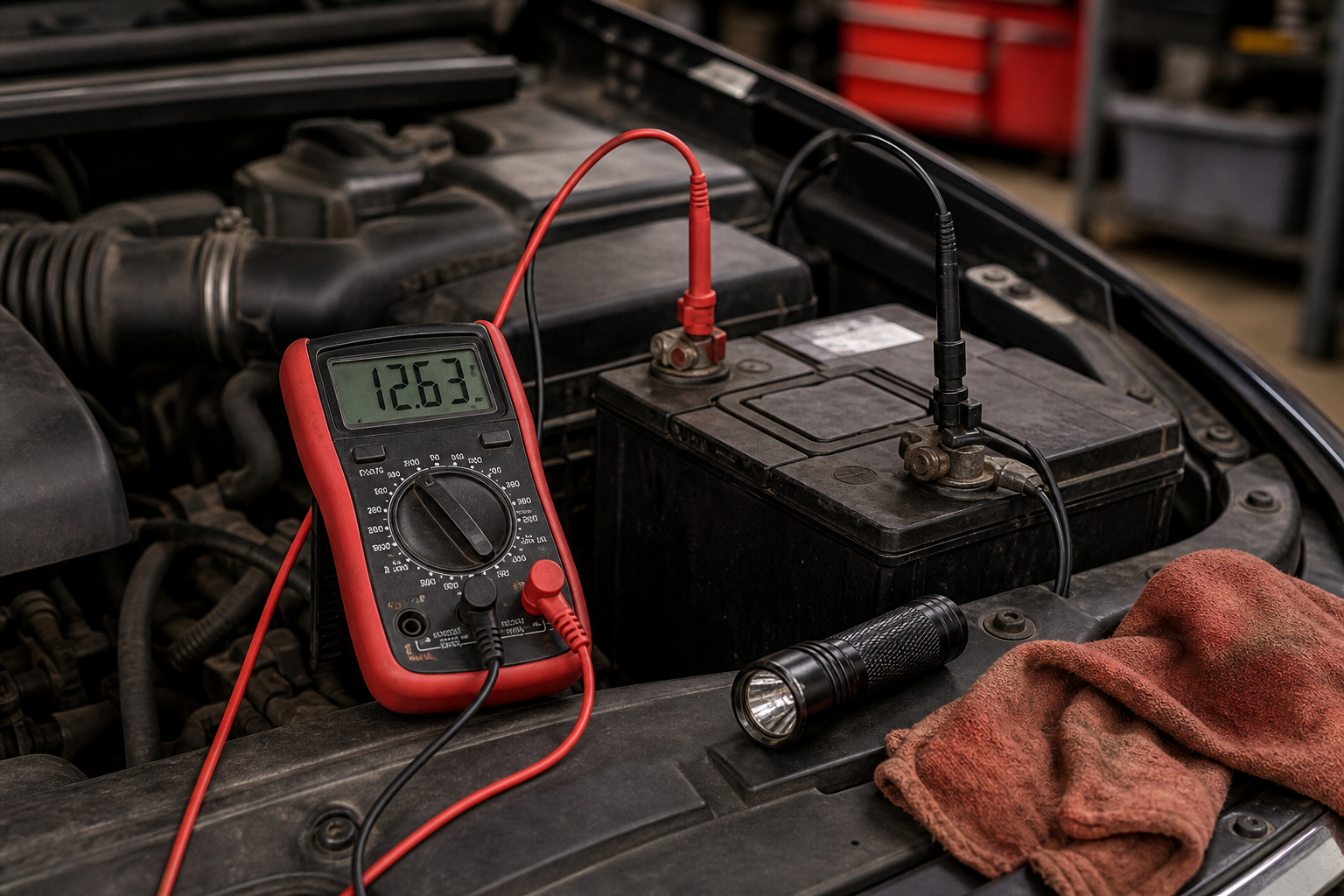
- Touch the red probe to the positive terminal and the black probe to the negative terminal.
- Read the voltage. A fully charged, healthy battery at rest should read around 12.6 volts. A reading around 12.4 volts suggests it's partially discharged. Below 12.0 volts, the battery is significantly depleted and may be failing. Under 11.8 volts at rest is essentially a dead battery.
For a more thorough test, have a load test done — many auto parts stores offer this for free. A load test checks how the battery performs under actual demand, which a simple voltage reading can't fully capture. A battery can read fine at rest but collapse the moment the starter draws current.
What Replacing a Car Battery Actually Involves
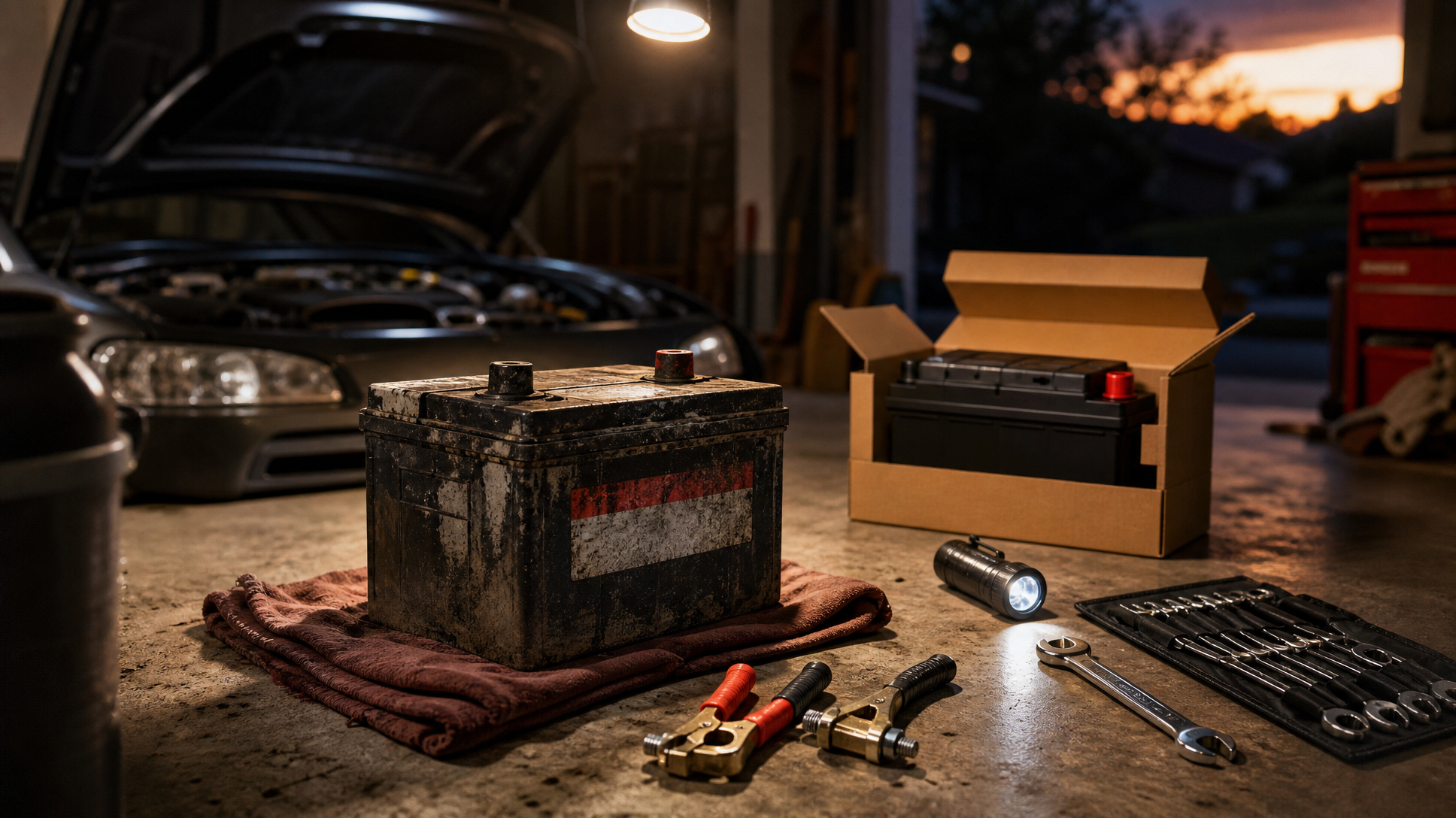
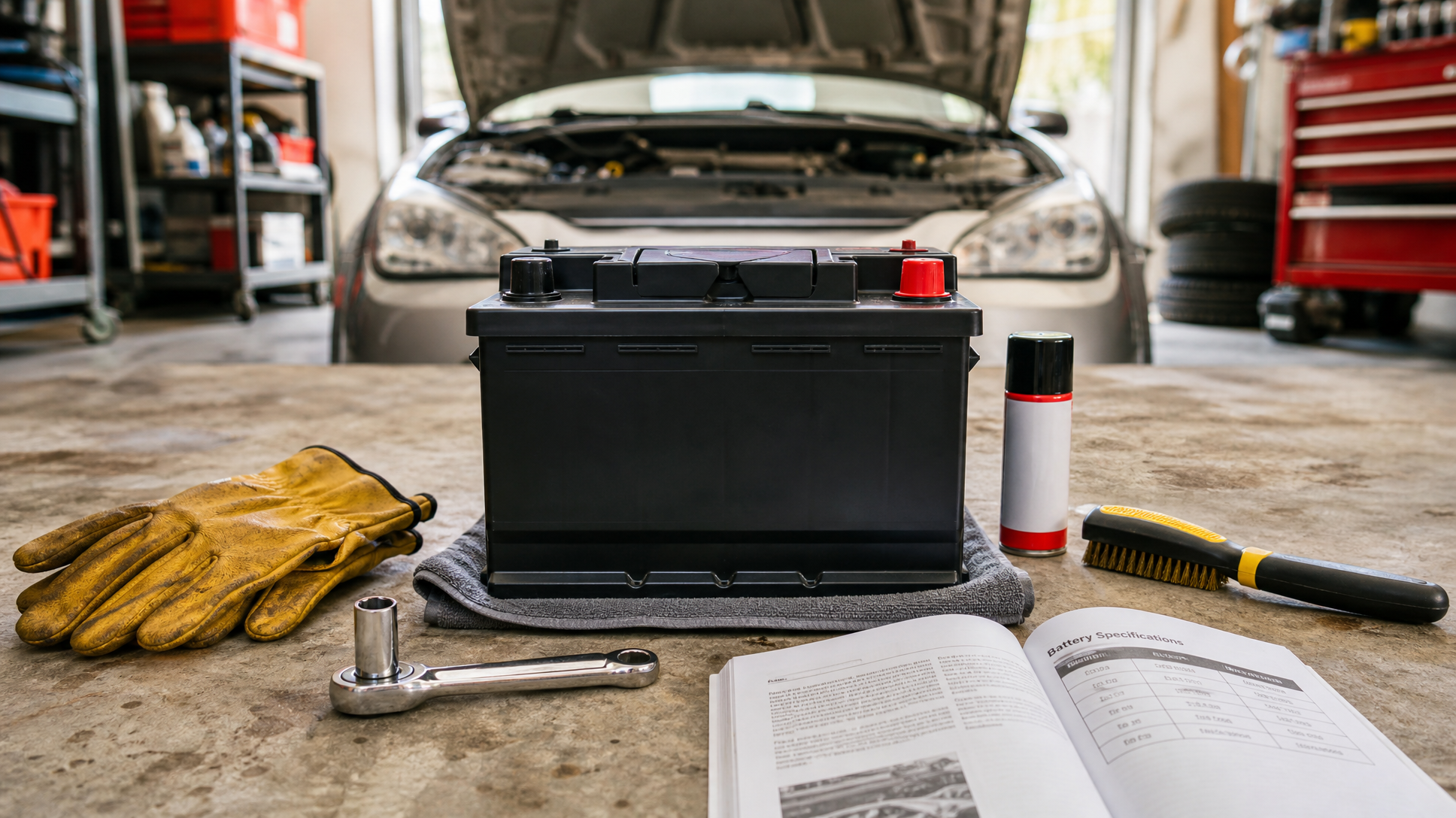
Swapping a car battery is one of the more approachable DIY jobs on a vehicle. The basic process: disconnect the negative terminal first (always negative first, to avoid a short), then the positive, remove the hold-down clamp, lift out the old battery, drop in the new one, reconnect positive first, then negative. Clean any corrosion off the terminals before reconnecting — a mix of baking soda and water works well, applied with an old toothbrush.
A few things worth knowing before you start:
- Match the group size. Car batteries come in different physical sizes and terminal configurations. Your owner's manual or a fitment guide will tell you which group size fits your vehicle. Don't assume one battery fits all.
- Cold Cranking Amps (CCA) matter. CCA is the battery's ability to start an engine in cold temperatures. If you live somewhere with harsh winters, don't go below your vehicle's recommended CCA rating.
- Some modern vehicles need a memory saver. Disconnecting the battery on newer cars can reset the ECU, radio presets, and power window positions. A battery memory saver (a small device that plugs into the OBD-II port or 12V outlet and keeps a trickle of power running) prevents this. Worth having on hand before you start.
- Dispose of the old battery properly. Car batteries contain lead and sulfuric acid — they can't go in the trash. Most auto parts retailers accept old batteries for recycling.
If you're not comfortable doing it yourself, a shop can handle the swap quickly. But for most vehicles, it's a straightforward job that takes under 30 minutes with basic tools.
Don't Wait for the Click
The click of a dead battery — that hollow, useless sound when you turn the key — is avoidable. Slow cranks, dim lights, and a battery that's pushing four years old are all the heads-up you need. Act on them when they're convenient, not when you're stuck.
If you're already looking into your car's electrical system, it's also worth checking your alternators and generators — a failing alternator is often mistaken for a battery problem, since it's responsible for keeping the battery charged while the engine runs. And if you're buying parts online, our guide on how to buy replacement auto parts online without getting the wrong fit is worth a read before you order.
Browse car batteries and electrical accessories at Carkart — fast shipping across the USA, competitive pricing, and a wide selection so you can find the right fit for your vehicle without the guesswork. First-time shopper? Use code WELCOME5 for 5% off your order.
Frequently Asked Questions
How long does a car battery typically last?
Most conventional lead-acid car batteries last roughly three to five years. Climate plays a big role — extreme heat accelerates battery wear, so drivers in hot regions often see lifespans on the shorter end of that range. If your battery is approaching three years old, it's worth having it tested even if it seems to be working fine.
Can I jump-start my way through a failing battery indefinitely?
Not really. Jump-starting a weak battery can get you moving in a pinch, but it doesn't fix the underlying problem. A battery that needs frequent jump-starts is one that's close to failing entirely — and relying on jumps puts extra strain on your alternator. Replacing it sooner is the practical move.
How do I know if the problem is the battery or the alternator?
A simple test: if the car starts fine after a jump but dies again within a short drive, the alternator may not be charging the battery while the engine runs — that points to an alternator issue. If the car struggles to start but runs normally once it's going, the battery is the more likely culprit. A load test at a parts store can help confirm which one is failing.
Do I need to reprogram anything after replacing my car battery?
On older vehicles, usually not. On newer cars with more sophisticated electronics, disconnecting the battery can reset the ECU, radio presets, and power window calibration. Using a battery memory saver before you disconnect prevents most of this. Even without one, most systems relearn their settings after a few drive cycles — check your owner's manual for any vehicle-specific steps.