Cart
0
Preventing Car Damage: Common Bad Driving Habits and Vehicle Maintenance Mistakes
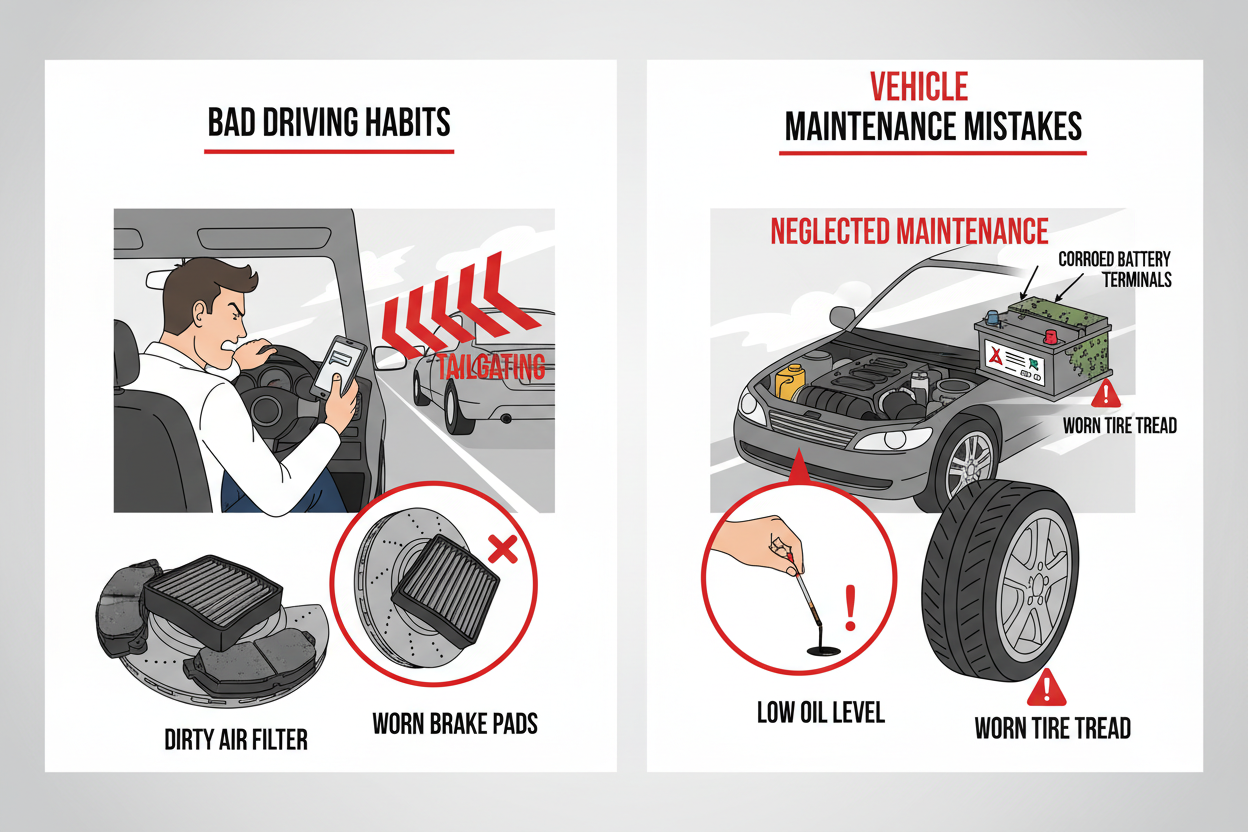
Maintaining your vehicle’s health goes beyond routine refills and washes. Understanding and correcting poor driving habits coupled with proper maintenance can dramatically extend your car’s life, increase safety, and reduce repair costs.
Key Takeaways
- Bad driving habits like harsh braking and aggressive acceleration significantly damage tires, brakes, transmission, and suspension.
- Regular maintenance — including tire rotations, transmission fluid changes, brake inspections, and suspension checks — ensures vehicle longevity.
- Running your fuel tank too low risks fuel pump overheating and clogging with sediment.
- Paying attention to dashboard warnings and unusual noises allows early detection of costly issues.
- Quality tires such as GT Radial provide enhanced safety, durability, and efficiency.
Table of Contents
- 1. How Bad Driving Habits Influence Your Tires
- 2. Transmission Deterioration: The Impact of Driving Habits
- 3. Brake System Erosion from Aggressive Driving
- 4. Risk to Suspension System from Rough Driving
- 5. Why Running Your Fuel Too Low Is Best Avoided
- 6. Ignoring No More: Dashboard Warnings and Unusual Noises
- 7. Engine and Brake Pressure from Vehicle Overload
- 8. Final Thoughts: Ensuring Longevity and Safety
- FAQ
1. How Bad Driving Habits Influence Your Tires
Tires are the crucial link between your vehicle and the road. Unfortunately, many common driving habits prematurely wear out tires and compromise safety.
Common Habits That Harm Tires
- Speeding over road irregularities: Hitting potholes or bumps at high speed can cause sidewall tears, tread damage, or blowouts.
- Sudden acceleration and harsh braking: These generate excessive heat and uneven tread wear.
- Inadequate cornering: Fast turns wear down tread unevenly.
- Ignoring tire pressure: Under-inflation causes sidewall damage and decreases fuel efficiency.
- Neglecting rotation and alignment: Leads to uneven tread wear and poor handling.
Effective Tire Maintenance Suggestions
- Check tire pressure monthly and inflate to manufacturer specifications.
- Inspect tread wear regularly; replace tires when tread depth falls below 2/32 inch.
- Rotate tires every 6,000–8,000 miles to balance wear.
- Maintain wheel alignment for even wear and better handling.
- Replace tires every six years to prevent rubber deterioration.
Benefits of Quality Tires Such as GT Radial
Premium tires like GT Radial offer superior traction, durability, and fuel efficiency. Their advanced technology improves grip on wet surfaces and extends tire life, helping you save money and drive safely.
For additional tips on tire maintenance, visit: GT Radial blog – 5 Ways to Prolong Your Tire Wear
2. Transmission Deterioration: The Impact of Driving Habits
The transmission is one of the most complex and costly components of a vehicle. Poor driving habits accelerate wear and increase the risk of failure.
Risky Transmission Practices to Avoid
- Gear-shifting without stopping: Switching between drive and reverse abruptly strains gears and selector forks.
- Resting your hand on the gearstick: Exerts unwanted pressure on transmission components, causing wear.
- Engine braking at high speeds: Overloads drivetrain parts leading to premature failure.
- Clutch riding: Partial clutch engagement wears out clutch discs faster.
Transmission Maintenance Best Practices
- Always come to a full stop before changing gears between drive and reverse.
- Avoid placing your hand on the gearstick when not shifting.
- Use the brake pedal to slow down rather than relying on engine braking at high speeds.
- Fully engage the clutch when shifting to prevent slippage.
- Follow manufacturer guidelines for regular transmission fluid changes.
By adopting smooth gear-shifting habits, you protect your transmission and extend your car's life.
3. Brake System Erosion from Aggressive Driving
Brakes are essential for safety, but harsh driving can drastically shorten their service life.
Detrimental Braking Practices
- Frequent harsh braking: Accelerates wear on pads and rotors.
- Keeping slight brake pressure while driving: Causes unnecessary friction and heat.
- Ignoring brake warnings: Squealing sounds or pedal vibration signal worn parts needing prompt service.
Measures to Preserve Your Brakes
- Anticipate traffic to brake gently and avoid sudden stops.
- Use engine braking moderately at low speeds to reduce wear.
- Have brakes inspected regularly, especially if noises or performance changes occur.
- Replace brake pads before they become critically worn to protect discs.
Proper brake maintenance protects your safety and reduces costly repairs. Learn more at: Heaven Automotive – How Routine Care Keeps Vehicles Reliable Long Term
4. Risk to Suspension System from Rough Driving
Your suspension ensures a smooth, stable ride, but rough driving accelerates component damage.
Ways Driving Behavior Impacts the Suspension
- Driving too fast over speed bumps, potholes, or curbs can bend or break shocks and struts.
- Overloading places excessive strain leading to faster wear and reduced fuel efficiency.
- Ignoring alignment issues causes uneven tire wear and unstable handling.
Suspension Practice Suggestions
- Slow down before traversing rough terrain or obstacles.
- Do not exceed your vehicle’s weight capacity.
- Schedule regular suspension inspections and wheel alignments.
- Investigate unusual noises, pulling, or irregular tire wear promptly.
Maintaining your suspension improves comfort, safety, and component longevity. For detailed tips, visit: GT Radial – Tire Maintenance Checklist
5. Why Running Your Fuel Too Low Is Best Avoided
Allowing your fuel level to fall too low can harm the fuel system and engine.
Ramifications of Running Low on Fuel
- Fuel pump overheating: Fuel cools the pump; low fuel causes overheating and pump failure risk.
- Sediment blockage: Sediments at the tank bottom can clog fuel filters and injectors when fuel is low.
Fuel Management Recommendations
- Refill your tank before it drops below one-quarter full.
- Avoid frequently running on low fuel to keep the system clean.
- Follow your vehicle’s fuel system service schedule.
Maintaining adequate fuel levels protects key components and improves reliability.
6. Ignoring No More: Paying Attention to Dashboard Warnings and Unusual Noises
Overlooking warning signals or strange noises often leads to larger problems and higher repair costs.
Frequently Found Dashboard Warning Indicators
- Check Engine Light: Indicates various engine or sensor issues.
- Brake Warning Light: Signals brake system malfunctions.
- Tire Pressure Monitoring System: Alerts for under-inflated tires.
Noises That Shouldn’t Be Overlooked
- Squeaky brake sounds.
- Clunking or rattling from suspension parts.
- Grinding gears or slipping transmissions.
Course of Action
- Consult a trusted mechanic immediately when warning lights appear.
- Investigate strange noises early to prevent further damage.
- Perform routine vehicle inspections to catch issues early.
“Ignoring warning signs can cost you more in the long run—addressing them early saves money and stress.”
7. Engine and Brake Pressure from Vehicle Overload
Many drivers underestimate the damage caused by overloading their vehicles.
Consequences of Overloading
- Extra strain on engine and transmission causing overheating and mechanical wear.
- Increased brake wear with longer stopping distances.
- Suspension damage due to excess weight.
- Reduced fuel efficiency and overall vehicle performance.
Load Management Techniques
- Be aware of your vehicle’s maximum load capacity noted in the owner’s manual.
- Distribute cargo evenly to avoid stress on specific parts.
- Eliminate unnecessary weight wherever possible.
- Consider upgrading tires or brakes for frequent heavy transports, especially with trusted brands like GT Radial.
Avoiding overload protects your vehicle’s systems and preserves safe operation.
8. Final Thoughts: Ensuring Longevity and Safety through Best Practices
Developing smooth driving habits, consistently performing maintenance, and investing in premium parts like quality tires are key to a long-lasting, safe vehicle.
Snapshot of Vital Tips
- Drive cautiously over bumps and potholes.
- Do not shift gears without a full stop.
- Keep your hand off the gearstick unless shifting.
- Use proper clutch technique and avoid clutch riding.
- Brake gently and anticipate stops.
- Maintain proper tire pressure and replace old tires.
- Keep your fuel level above one-quarter tank.
- Respond promptly to dashboard warnings and unusual sounds.
- Never overload your vehicle.
By adopting these habits, you safeguard your vehicle’s vital systems, extend its lifespan, and enjoy safer, more efficient travels.
At Carkart, we are dedicated to guiding you with expert advice and access to premium automotive accessories like superior tires. Explore quality options with GT Radial’s comprehensive tire care guide.
FAQ
How often should I check my tire pressure?
It is recommended to check tire pressure at least once a month and before long trips to ensure safety and optimal fuel efficiency.
Can aggressive driving really damage my transmission?
Yes, habits like shifting gears without stopping or clutch riding create excessive wear that can lead to costly transmission failures.
What should I do when the check engine light turns on?
Have your vehicle inspected promptly by a professional mechanic to diagnose and fix any underlying issues before they worsen.
Why is it important not to let my fuel run too low?
Running low on fuel can cause the fuel pump to overheat and may draw sediments into the fuel system, risking component damage.
How does vehicle overload affect fuel economy?
Overloading increases the engine’s workload, leading to increased fuel consumption and reduced efficiency.