Cart
0
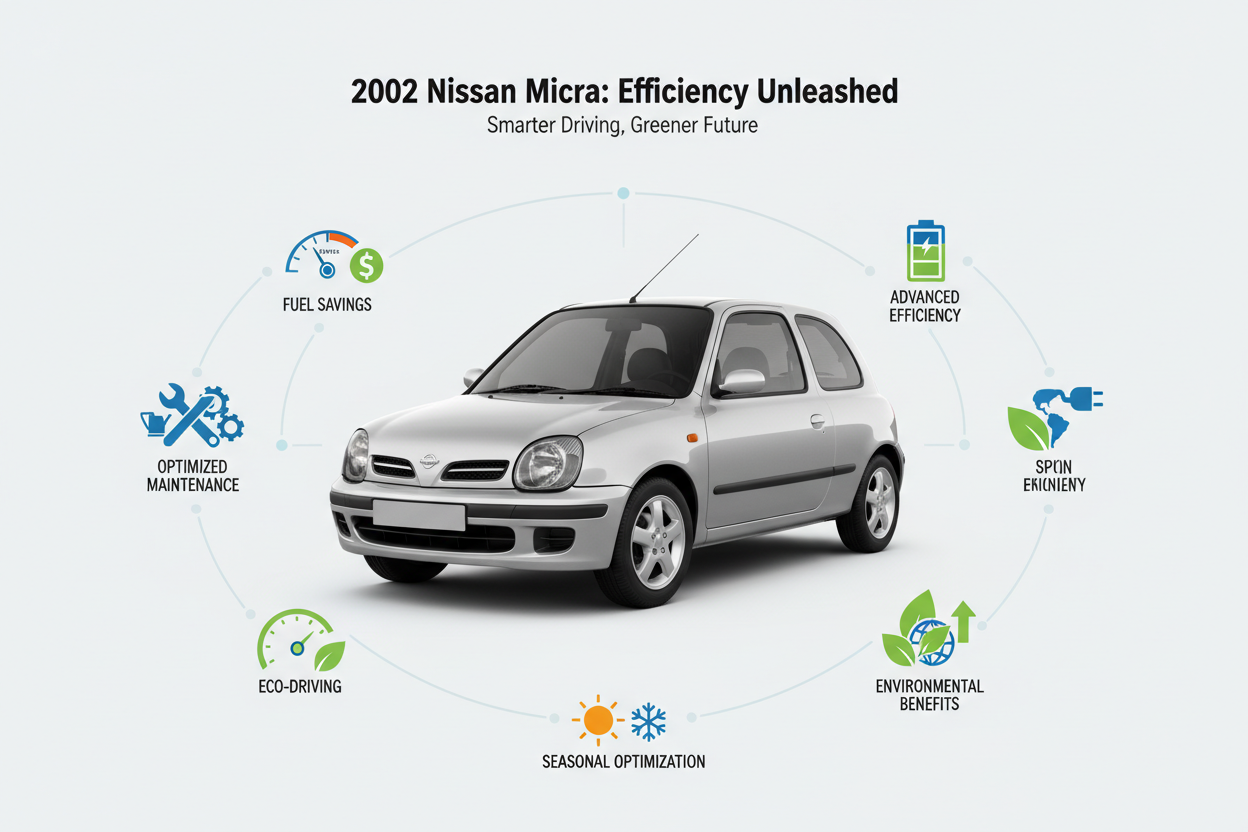
Boosting the fuel efficiency of your 2002 Nissan Micra is simpler than you might think. Through careful maintenance, smarter driving, and attentive seasonal care, you can lower fuel costs, extend your car’s lifespan, and contribute positively to the environment.
Key Takeaways
- Regular maintenance such as air filter changes, spark plug checkups, and proper tire inflation greatly enhances fuel economy.
- Adopting gentle acceleration, steady speeds, and reducing idle times can improve your Micra’s mileage by up to 40%.
- Shedding excess weight and adjusting habits seasonally keeps your fuel consumption optimal year-round.
- Fuel your vehicle during cooler morning hours to get the most volume for your money.
- Avoid unverified aftermarket modifications; focus on proven strategies for long-term benefits.
Table of Contents
- 1. The Essential Role of Regular Maintenance in Fuel Efficiency
- 2. Intelligent Driving Practices to Enhance Your Nissan Micra’s Fuel Efficiency
- 3. How Shedding Vehicle Weight Enhances Fuel Efficiency
- 4. Seasonal and Environmental Strategies to Optimize Fuel Efficiency
- 5. Fueling Techniques to Get the Most Value for Your Money
- 6. Why Relying on Unverified Modifications for Older Cars Can Be Detrimental
- 7. Blending All Strategies: Establishing a Fuel-Efficient Regimen for Your Nissan Micra
- 8. Embracing the Financial and Ecological Advantages of Elevating Fuel Economy
- FAQ
1. The Essential Role of Regular Maintenance in Fuel Efficiency
Maintaining your 2002 Nissan Micra regularly is a vital step toward optimal fuel economy. Key areas to focus on include:
Ensure a Clean Air Filter
A clogged air filter disrupts the delicate air-fuel balance required for efficient combustion. Changing it every 12,000 to 15,000 km can enhance fuel economy by up to 10%.
- Maintains the perfect air-fuel ratio
- Enhances acceleration and engine response
- Reduces fuel consumption
Keep Spark Plugs in Top Condition
Worn or dirty spark plugs cause incomplete combustion, wasting fuel and reducing efficiency up to 30%. Check every 30,000 km and replace as needed, using plugs designed for your Micra.
Choose the Correct Motor Oil Grade
Using the proper oil grade (typically 5W-30 or 10W-30) lowers engine friction for smoother operation, improving economy by 1-2%. Follow the owner’s manual for oil brand and change intervals.
Maintain Proper Tire Inflation
Underinflated tires increase rolling resistance, forcing the engine to consume more fuel. A 10 psi drop can reduce mileage by up to 10%. Check tire pressure monthly and inflate to around 30-32 psi.
Verify Gas Caps and Fuel System Seals
Ensure your gas cap fits tightly to prevent fuel evaporation and emissions issues. Periodically inspect seals to avoid leaks that decrease efficiency.
2. Intelligent Driving Practices to Enhance Your Nissan Micra’s Fuel Efficiency
How you drive significantly impacts fuel economy. Implement these smart driving habits to maximize your Micra’s efficiency:
Gentle Acceleration and Braking
Avoid abrupt starts and stops that demand extra fuel. Gradual acceleration and anticipating traffic flow can improve fuel efficiency by 10% to 40%.
Sustained Moderate Speed
Maintain speeds between 50 km/h and 90 km/h to reduce aerodynamic drag. Using cruise control on highways helps sustain steady speeds and prevents unnecessary fuel spikes.
Reduce Engine Idle Time
Turn off your engine if stationary for more than three minutes, as idling wastes fuel. This is especially relevant for older models like the 2002 Micra without automatic stop-start systems.
3. How Shedding Vehicle Weight Enhances Fuel Efficiency
Every extra kilogram in your car increases fuel consumption by about 2% for every 50 kg added. Control weight to ease the engine’s workload.
- Remove unnecessary items from the cabin and trunk.
- Avoid fitting unused roof racks or external accessories.
- Pack luggage efficiently on trips.
4. Seasonal and Environmental Strategies to Optimize Fuel Efficiency
Weather impacts your Micra’s performance. Adjust your habits to maintain fuel efficiency throughout the year.
Winter Fuel Efficiency Suggestions
- Limit cold-start idling to about 30 seconds to allow oil circulation.
- Regularly check and maintain tire pressure, as cold air lowers it naturally.
- Combine trips to warm the engine and tires faster and reduce total cold idling.
Heat Management in Summer
- Park your Micra in shaded areas to prevent excessive cabin heat buildup.
- Ventilate the cabin briefly by rolling down windows before highway driving.
- Use air conditioning sparingly; at speeds over 80 km/h, AC is more efficient than open windows.
5. Fueling Techniques to Get the Most Value for Your Money
Fuel varies slightly in volume depending on temperature. Filling early in the cool morning hours gives you roughly 2.5% more gasoline by volume compared to refueling in the heat of the afternoon.
6. Why Relying on Unverified Modifications for Older Cars Can Be Detrimental
While tempting, aftermarket modifications to boost fuel economy on older models like the 2002 Micra often backfire by:
- Failing safety and inspection requirements.
- Negatively impacting fuel efficiency or engine health.
- Being less effective than regular maintenance and driving habits.
Focus on proven maintenance and driving strategies to avoid costly mistakes.
7. Blending All Strategies: Establishing a Fuel-Efficient Regimen for Your Nissan Micra
Consistency is key. Use this checklist to embed these habits into your routine:
Monthly Maintenance Checklist
- Check and adjust tire pressure.
- Inspect gas cap and fuel system seals.
- Remove unnecessary weight from the vehicle.
Biannual or Annual Maintenance
- Replace spark plugs per manufacturer guidelines or earlier if needed.
- Change the air filter.
- Change engine oil and oil filter using recommended grade and quality.
Daily Practices and Driving Habits
- Accelerate and brake gently.
- Use cruise control to maintain steady speeds on highways.
- Turn off the engine when stopped for long periods.
- Fill up your tank in the morning whenever possible.
Preparing for Seasonal Changes
- Adjust tire pressures during cold months.
- Limit idling and combine trips in winter.
- Use cooling strategies in summer to reduce AC reliance.
8. Embracing the Financial and Ecological Advantages of Elevating Fuel Economy
Implementing these practices will not only save you money but also help reduce your environmental footprint. Improved fuel efficiency means:
- Lower greenhouse gas emissions.
- Decreased air pollution for cleaner local environments.
- Prolonged engine life and fewer repairs.
- Less money spent on rising fuel prices.
Start today and enjoy more economical and eco-friendly drives with your 2002 Nissan Micra.
FAQ
Q1: How often should I replace the air filter on my 2002 Nissan Micra?
It is recommended to inspect and replace the air filter every 12,000 to 15,000 km or as specified in your owner’s manual.
Q2: Can changing my driving habits really make a large difference in fuel efficiency?
Yes, gentle acceleration, steady speeds, and reducing idle time can improve your fuel economy by 10% to 40%, which is significant.
Q3: Is it better to fill my gas tank in the morning or afternoon?
Filling your tank in the cooler morning hours provides approximately 2.5% more gasoline by volume due to fuel contraction in cooler temperatures.
Q4: Should I consider aftermarket modifications to improve fuel efficiency?
For a 2002 Nissan Micra, aftermarket modifications can be risky and sometimes detrimental. Instead, focus on regular maintenance and smart driving habits for best results.
Q5: How does tire pressure affect fuel economy?
Underinflated tires increase rolling resistance, causing your engine to work harder and use more fuel. Maintaining recommended tire pressure can improve mileage and tire lifespan.