Cart
0
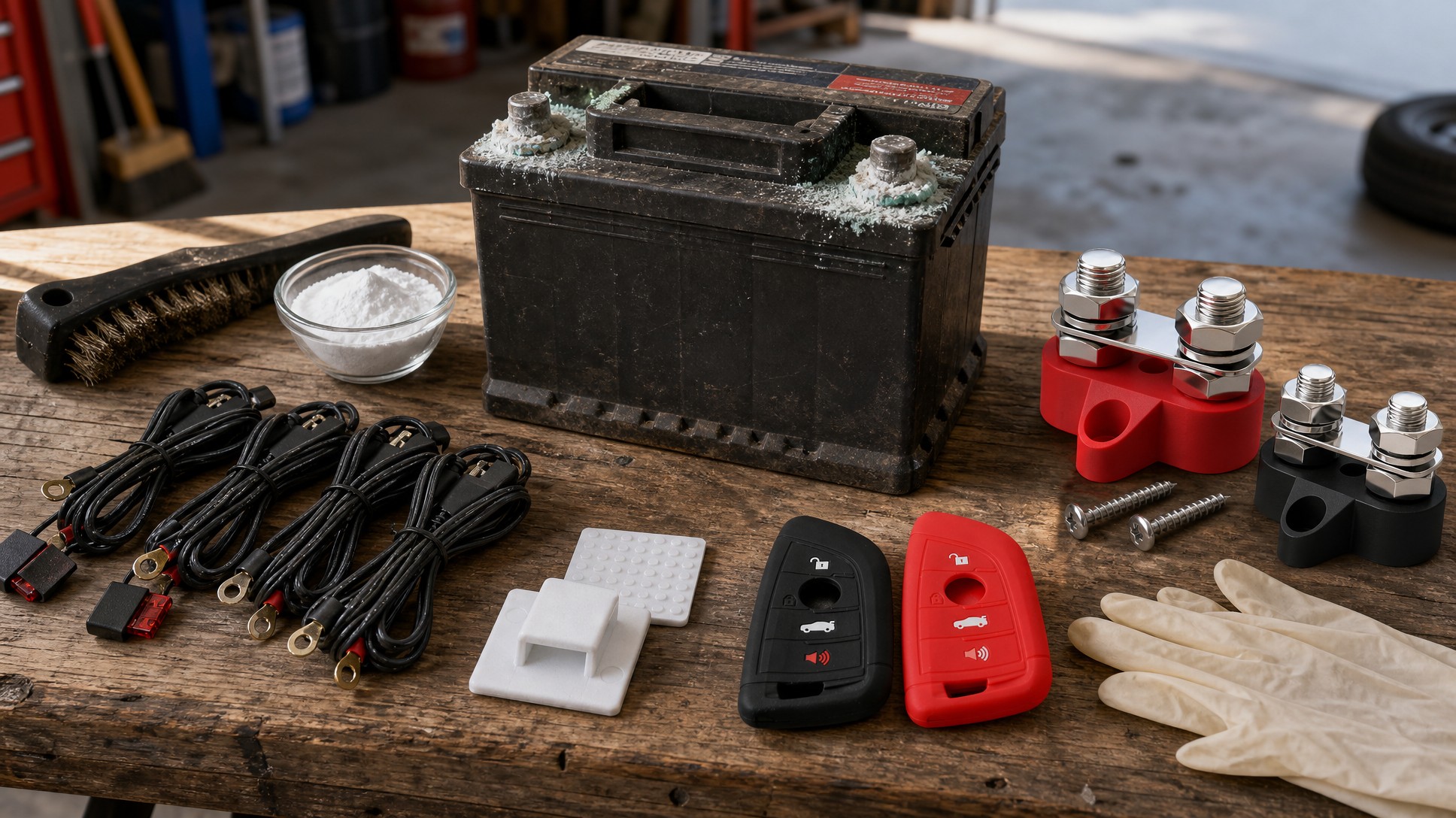
You clean the battery terminals. You're thorough about it — baking soda, a wire brush, maybe some dielectric grease on the way out. It looks great. Then three months later you pop the hood and the same chalky white crust is sitting right where you left it. So what's going wrong?
The short answer: cleaning corrosion without fixing the conditions that cause it is the automotive equivalent of mopping around a leak. The corrosion comes back because the source never went away. Understanding that source — and addressing it at the connection level — is what actually breaks the cycle.
Why Battery Terminals Corrode in the First Place
Battery terminals corrode primarily because of hydrogen gas. During normal charging and discharging, lead-acid batteries vent small amounts of hydrogen sulfide gas. That gas reacts with the metal at the terminals — typically lead and copper — and with moisture in the air, producing the white, blue-green, or gray powdery deposits you're used to seeing. Positive terminals tend to corrode faster when the battery is overcharging; negative terminals corrode more when it's undercharging. So the pattern of buildup can actually tell you something about your charging system.
Heat accelerates all of this. Vibration loosens connections over time, creating tiny gaps where moisture and gas can pool. And a loose terminal — even one that feels snug by hand — is a corrosion magnet, because the micro-arcing at a poor connection generates both heat and oxidation.
That last point is the one most drivers miss. The connection quality matters as much as the cleaning.
The Real Fix Starts at the Connection
If your terminals are corroding repeatedly, it's worth asking whether your connections are actually solid. A ring terminal that's only finger-tight, a wire that's slightly undersized for the load, or a ground that's attached to a rusty chassis point — any of these create the conditions for accelerated corrosion.
This is where the right hardware pays off. The Joinfworld 5/16" Bus Bar 12V 200A Battery Wire Power Distribution Terminal Block is a good example of the right approach. It's a dual-stud junction block — one black body for negative, one red for positive — with polished stainless steel studs and hardware, designed to give you a single, solid, organized connection point for multiple wires rather than stacking ring terminals on a single battery post. Stacking terminals on a post is a common cause of loose connections; a dedicated bus bar eliminates that problem entirely.
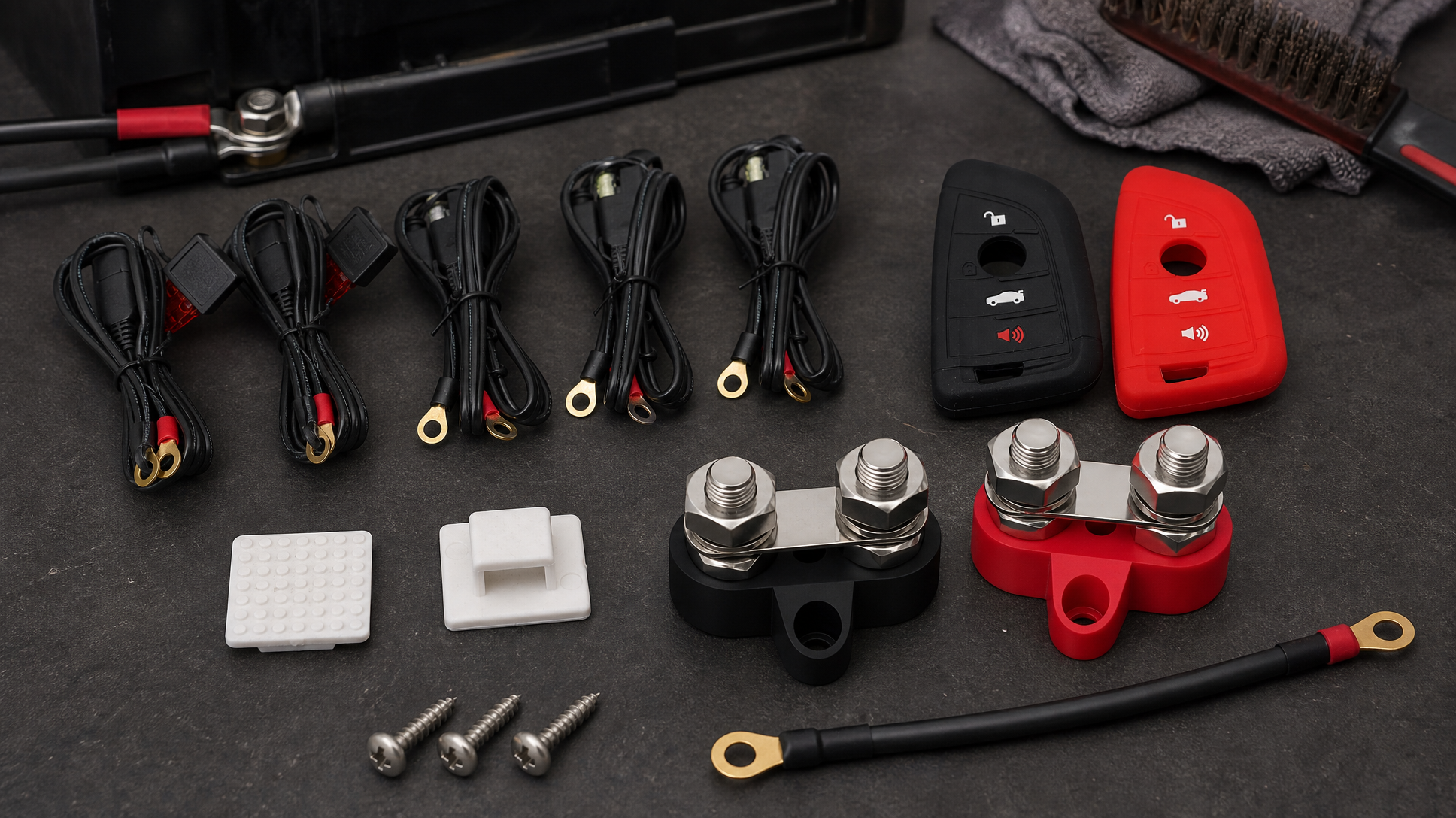
For anyone running a battery maintainer or tender on a motorcycle, tractor, or secondary vehicle, the Imestou 2Ft SAE to O Ring Terminal Harness 2 Pin Quick Disconnect Plug (5Pcs) is worth having in your kit. The harness uses eyelet (O-ring) terminals at the battery end — the type that bolt directly to the post for a flush, secure connection — and a quick-disconnect SAE plug at the charger end. That means you can connect and disconnect your maintainer without disturbing the terminal connection itself. Repeatedly clamping and unclamping alligator clips to your posts is a surprisingly common way to introduce small nicks and oxidation points. A permanent harness with a clean disconnect solves that.
After the Connection: Protecting What You've Built
Once your connections are solid, protection is straightforward. Dielectric grease applied to the terminal after tightening displaces moisture and slows oxidation significantly. Anti-corrosion terminal pads — felt washers treated with a corrosion inhibitor — sit between the terminal and the post and neutralize the hydrogen gas before it can react. These are cheap, effective, and almost nobody uses them.
Cable management matters too. Wires that rub against hot engine components or vibrate against metal edges develop insulation wear, which creates new corrosion points down the line. If you're routing wires through tight spots or along panels, adhesive cable tie mounts keep things tidy without drilling. The Weld Mount AT-3 Small White Tie Mount (Qty 100) is a small, square adhesive mount with a textured backing pad and a central slot for a cable tie — the kind of detail-oriented solution that makes a clean install stay clean. They're white, which makes them less visible against light-colored interior or engine bay surfaces.
Don't Forget the Key Fob (Seriously)
This one's a bit of a left turn, but it belongs in any honest conversation about battery maintenance: key fob batteries. The CR2032 or similar coin cell inside your remote is a battery too, and its contacts corrode just like your car's main terminals — just on a much smaller scale. A cracked or worn key fob housing lets in moisture and speeds up that process.
The Keyless Entry Remote Key Fob Cover Skin Case Protective Silicone Rubber Key Jacket Protector for BMW 2014–2017 X1 F48, X3, X4, X5, X6 (1 Black + 1 Red) wraps your BMW smart key in a snug silicone shell that keeps moisture, dust, and daily pocket wear away from the housing. It comes as a two-pack — black and red — so you can swap depending on mood or keep one as a spare. The buttons remain fully accessible through the silicone, and the cutout for the key blade slot is cleanly finished. It won't stop a dead fob battery, but it'll protect the housing that keeps the contacts clean and the electronics dry.
The Maintenance Rhythm That Actually Works
Here's the honest version of battery terminal maintenance:
- Fix the connection first. Tighten every terminal. Replace any ring terminal that looks corroded at the crimp. Consider a bus bar if you're running multiple accessories.
- Clean the existing corrosion properly. A baking soda and water solution neutralizes the acid-based deposits. Rinse, dry completely, then reconnect.
- Apply protection before you close it up. Dielectric grease on the post, anti-corrosion pads if you have them, and check that any maintainer harness is using a secure eyelet connection rather than clamp clips.
- Route and secure your wiring. Adhesive tie mounts for any loose runs. No wire should be able to rub against metal or heat sources.
- Check it seasonally, not just when something goes wrong. A quick visual inspection every few months catches buildup before it becomes a starting problem.
The cycle of clean-and-repeat only breaks when you address what's feeding the corrosion — loose connections, moisture ingress, and poor cable management. Get those right, and your terminals will stay clean far longer than they ever did with cleaning alone.
Keep your battery connections clean and reliable — browse battery accessories and more at Carkart and find everything you need to do the job right the first time.
Frequently Asked Questions
What causes the white powder on battery terminals?
The white (or sometimes blue-green or gray) powder is a buildup of lead sulfate and other corrosion byproducts. It forms when hydrogen gas vented from the battery reacts with moisture in the air and the metal at the terminal. It's a normal byproduct of battery chemistry, but loose connections and high heat significantly speed it up.
Is corroded battery terminal corrosion dangerous to touch?
The deposits can be mildly irritating to skin and eyes, so it's a good idea to wear gloves and avoid touching your face while cleaning them. Rinse any contact with water. The corrosion itself isn't acutely toxic, but it's worth treating with basic caution.
Does a battery maintainer help prevent corrosion?
Yes — keeping a battery at its proper charge level reduces the amount of gas it vents, which is one of the primary sources of corrosion. A float-mode maintainer on a stored vehicle (motorcycle, boat, seasonal car) is one of the most effective ways to slow terminal corrosion between uses. Using a permanent SAE harness with an eyelet terminal — rather than clamp clips — keeps the connection clean while the maintainer is hooked up.
How often should I check my battery terminals for corrosion?
A quick visual check every three to four months is a reasonable rhythm for most drivers. If you live in a hot climate, park outdoors, or run a lot of accessories off your battery, check more frequently. Catching light buildup early — before it bridges the terminal gap or causes a voltage drop — is much easier than dealing with heavy corrosion that's had months to set.