Cart
0
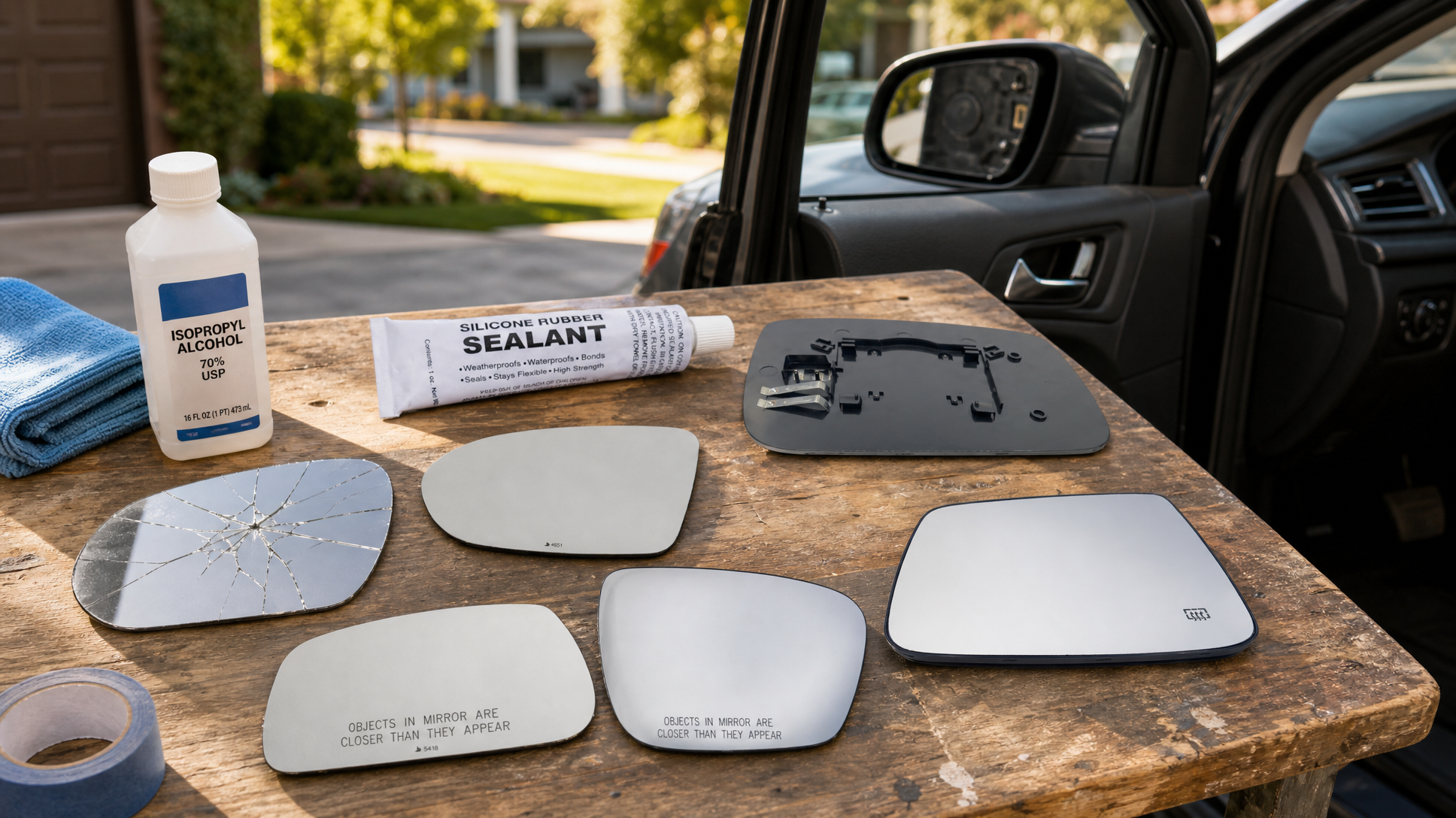
You back out of the driveway, catch the mirror housing on the garage door frame, and now there's a spiderweb crack across the glass. Your first instinct is probably to dread the repair bill — a full mirror assembly from a dealership isn't cheap, and body shops don't exactly give those jobs away either.
Here's the thing most drivers don't realize: in the majority of cases, you don't need to replace the whole mirror. Just the glass.
Glass-only replacement is a legitimate, widely-used repair approach — not a shortcut. The mirror housing, the motor, the heating element connections, the turn signal if your car has one — all of that can stay exactly where it is. You're only swapping the reflective glass panel that sits inside the housing. Done right, it's indistinguishable from a factory repair.
When Glass-Only Replacement Actually Works
The short answer: it works when the housing itself is structurally intact. If the plastic shell is cracked, the pivot mechanism is broken, or the motorized adjustment is dead, then yes — you're looking at a full assembly. But if the housing is fine and only the glass is cracked, chipped, fogged, or delaminated, a glass-only replacement is the right call.
It's also the right call when a heated mirror glass stops heating, since the heating element lives in the glass — not the housing. Replacing just the glass restores that function without touching the rest of the assembly.
The Two Types of Glass Replacement You'll Encounter
Walk through the replacement mirror glass category and you'll quickly notice two distinct installation styles. Understanding the difference before you buy saves a lot of frustration.
Adhesive-Pad Style (Peel-and-Stick)
This is the most common type for passenger cars and smaller vehicles. The replacement glass comes with a full-size adhesive pad pre-cut to match the glass shape. You clean the old adhesive residue off the mirror backing plate, peel the liner, press the new glass into position, and hold it for a minute or so. No tools. No clips to fight with.
The Mirror Glass + Full Size Adhesive Pad For 2016-2019 Chevrolet Cruze Driver Side Replacement is a clean example of this style — a flat, rounded glass panel that ships with a full-size adhesive pad included, designed to bond directly to the existing backing plate in the housing. Same goes for the Passenger Side Mirror Glass Replacement With Full Size Adhesive Pad For 2012-2015 Volkswagen Passat, which even offers two options to account for different trim configurations on that model.
The adhesive pad approach works because modern automotive-grade adhesives hold extremely well once cured. The glass isn't going anywhere.
Clip-In / Plate-Backed Style
Trucks, SUVs, and some larger vehicles use a different mounting system. Instead of bonding to a flat plate, the glass assembly snaps or clips into a plastic carrier that locks into the housing. These replacements typically include a backing plate with molded tabs and clips — you can see exactly this on the Ram Driver Left Side Heated Mirror Glass Compatible With Dodge Ram 1500 2500 2009-2018, which comes as a glass-and-backing-plate unit with the mounting hardware already attached. This style also handles the heated function: the replacement glass includes the heating element, and the electrical connectors transfer over from the old unit.
The clip-in process takes a few more steps than peel-and-stick — usually you need to pop the old glass out using a trim removal tool or a flathead wrapped in tape — but it's still a DIY-friendly job on most vehicles.
Silicone Sealant Style
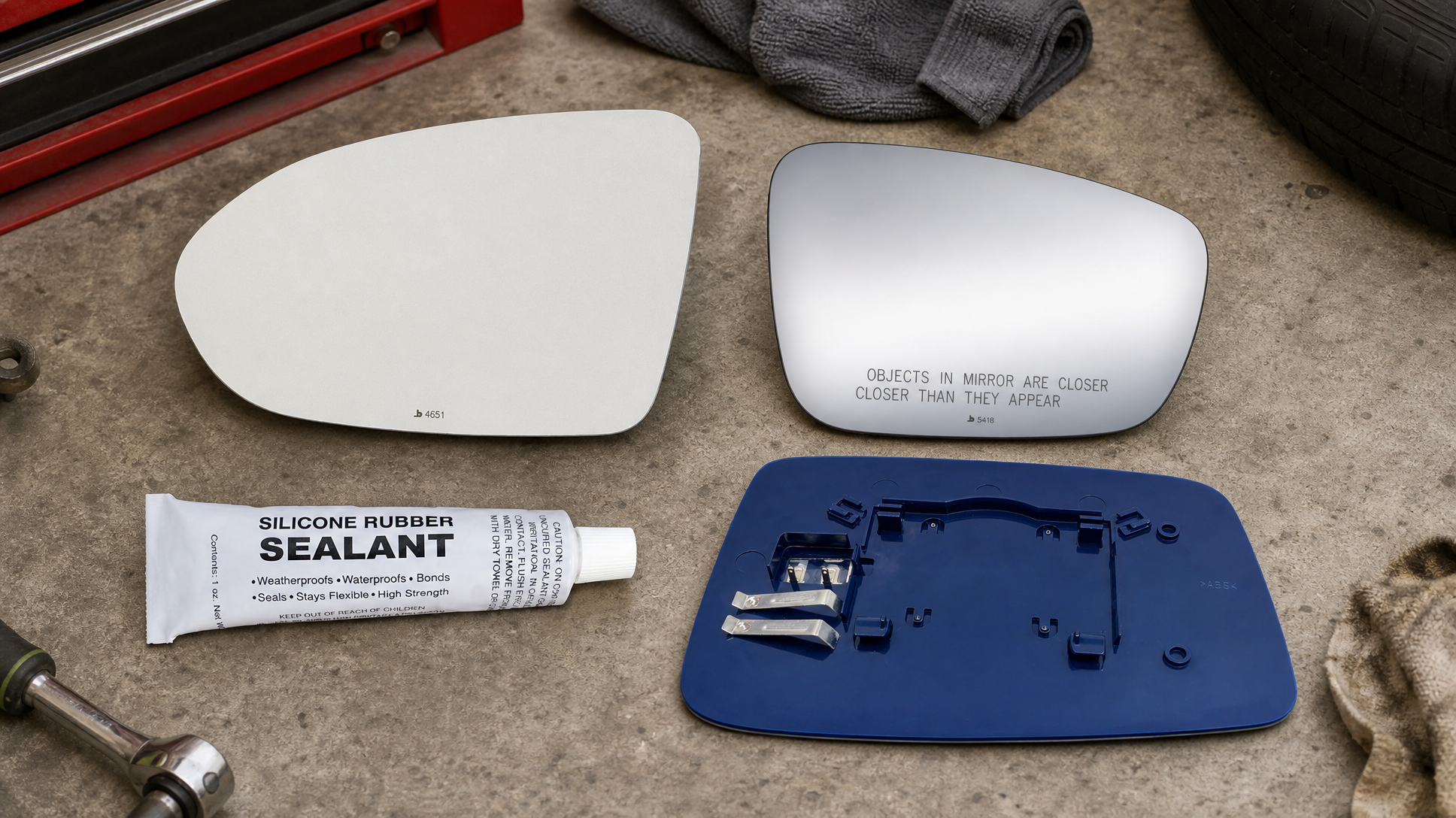
Some replacements, particularly for older or import vehicles, use silicone rubber sealant rather than a pre-applied adhesive pad. The Mirror Glass Replacement + Silicone Adhesive For 2010-2015 Hyundai Tucson Passenger Side is packaged exactly this way — the glass ships nestled in bubble wrap inside a cardboard box, with a tube of silicone rubber sealant included. You apply a bead of sealant to the backing plate, press the glass in, and let it cure. It's a slightly slower process (you'll want to tape the glass in position while the sealant sets), but the bond is flexible and weather-resistant, which matters in climates with big temperature swings.
How to Pick the Right Replacement
Fitment is everything with mirror glass. A piece that's even slightly off in shape won't seat correctly in the housing, and gaps around the edge look wrong and can let moisture in. Here's what to confirm before ordering:
- Year, make, and model — obvious, but double-check it. The 2016-2019 Cruze glass, for example, won't fit a 2015 or 2020 even though the exterior styling is similar.
- Driver side vs. passenger side — these are not interchangeable. The curvature and shape are mirrored (literally), and the heating connector position differs on heated glass.
- Flat vs. convex — passenger-side mirrors in the US are almost always convex (that's where the "objects are closer than they appear" text comes from, as required by federal safety standards). Driver-side mirrors are typically flat. Confirm which type your vehicle uses before ordering.
- Heated or non-heated — if your current mirror has a heating function and you replace it with non-heated glass, you lose that feature. The Ram 1500/2500 replacement above is specifically a heated convex glass; that detail matters.
- Trim-level variations — some models have different mirror configurations depending on the trim. The Passat replacement listed here offers two options for exactly this reason. Read the fitment notes carefully.
If you're unsure about any of these, the related guide on how to buy replacement auto parts online without getting the wrong fit walks through the full fitment-verification process in detail.
What the Installation Actually Looks Like
For adhesive-pad replacements, the process is straightforward: clean the backing plate thoroughly (isopropyl alcohol works well), let it dry completely, peel the adhesive liner, align the new glass carefully — you only get one shot before the adhesive grabs — and press firmly for at least a minute. Give it several hours before driving in rain or putting the mirror through its full range of motion.
For silicone sealant replacements, apply the sealant in a consistent bead, press the glass in, and tape it in place while the sealant cures. Rushing the cure is the most common mistake — a partially cured bond can shift.
For clip-in assemblies, the trickiest part is usually removing the old glass without cracking it further or damaging the housing. Work slowly from one corner, applying even pressure. Once it's out, the new unit typically clicks into place with satisfying firmness.
None of these jobs require a lift, specialty tools, or mechanical experience beyond basic patience. Most drivers finish in under an hour.
Is It Worth It vs. a Full Assembly?
Almost always, yes — assuming the housing is intact. A full mirror assembly (with motor, housing, and all) costs significantly more than a glass-only replacement, and installation is more involved. Glass-only replacement gets your mirror back to full function without the extra expense or complexity. The only time a full assembly makes sense is when the housing is broken, the motor is dead, or the pivot mechanism is damaged beyond the glass.
If you're not sure which situation you're in, look at the housing with the car parked. If it folds and unfolds normally, adjusts electrically without grinding, and looks structurally solid — you almost certainly only need the glass.
Browse replacement mirror glass for your vehicle at Carkart — most orders ship free across the USA, and the product listings include detailed fitment notes to help you confirm the right match before you buy.
Frequently Asked Questions
How do I know if my mirror glass is flat or convex?
Look at the reflection — if objects appear smaller than they actually are and the field of view seems wider than normal, the glass is convex. Convex mirrors in the US are also required by federal regulation to carry the text "Objects in mirror are closer than they appear." Driver-side mirrors are typically flat; passenger-side mirrors are typically convex, though this can vary by vehicle.
Can I replace a heated mirror glass myself, or does it need a shop?
Most heated mirror glass replacements are DIY-friendly. The heating element is built into the glass itself, and the electrical connectors simply plug in from the old backing plate to the new glass — no wiring work required. The Ram 1500/2500 heated replacement, for example, uses this plug-in approach. Just confirm your replacement is listed as heated to match your existing setup.
What if the new glass doesn't stick or starts to peel?
The most common cause is surface prep. The backing plate needs to be completely clean and dry before the adhesive pad or sealant goes on — any old adhesive residue, wax, or moisture will compromise the bond. Isopropyl alcohol is the standard cleaner for this. Also, don't rush: let the adhesive or sealant cure fully before exposing the mirror to rain, car washes, or extreme temperature changes.
What happens if I order the wrong side — can I return it?
Driver-side and passenger-side mirror glass are not interchangeable — the shape, curvature, and heating connector position differ. If you order the wrong side, you'll need to exchange it. Before ordering, double-check the side listed in the product title and fitment notes. When in doubt, cross-reference your vehicle's year, make, model, and trim level against the product's compatibility list.