Cart
0
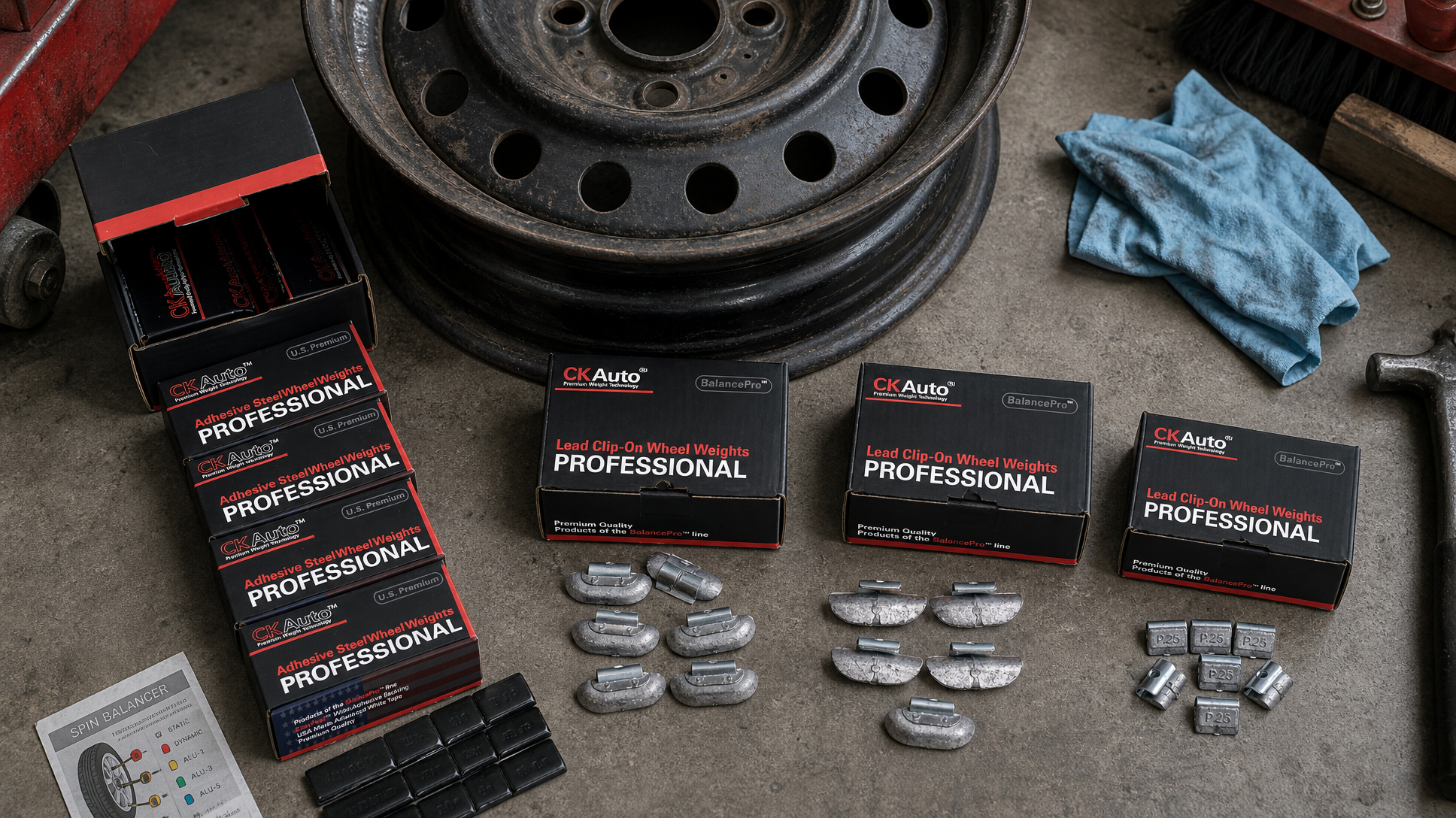
The shake everyone blames on alignment
Your steering wheel starts vibrating somewhere around highway speed. Maybe your tires are wearing faster on one edge. Your first instinct is probably to book an alignment — but nine times out of ten, the culprit is wheel balance, not alignment. They're related but different problems, and mixing them up costs you time and money.
Wheel balance is about the distribution of weight around a spinning tire-and-wheel assembly. When that distribution is off — even slightly — the wheel wobbles at speed rather than spinning true. A small imbalance that's barely noticeable at 40 mph can feel like a jackhammer at 70.
Here's what actually causes it, how to tell if it's happening to you, and what a proper rebalance involves.
The most common root causes of wheel imbalance
Lost wheel weights
This is the number-one cause, and it happens more than most drivers realize. Wheel weights — the small adhesive or clip-on weights a technician attaches during a balance job — can fall off. Adhesive weights lose grip when road grime, moisture, or a poor original application breaks the bond. Clip-on weights get knocked loose by a pothole, a curb clip, or even a car wash brush catching an edge. The moment one leaves the wheel, your balance changes.
If your car drove perfectly after a recent balance job and then started vibrating again weeks later, a missing weight is almost certainly why.
Impact damage to the wheel or tire
A hard pothole hit or a curb strike can do two things at once: knock a weight off and deform the wheel itself. A bent rim — even a subtle one you can't see with the naked eye — creates a heavy spot that no amount of weight can fully correct. If your car vibrates and you've recently taken a hard hit, have the wheel inspected for runout before you assume rebalancing alone will solve it.
Uneven tire wear
Tires don't wear perfectly evenly over time. Flat spots from emergency braking, cupping from worn shocks, or simply high mileage can shift the mass distribution of the tire itself. A tire that balanced fine at 10,000 miles may be noticeably out by 25,000. This is why most shops recommend rebalancing every time you rotate your tires — the wear pattern changes, and so does the balance point.
New tires or wheels
Every new tire or wheel needs to be balanced before it goes on the car. Manufacturing tolerances mean no tire or rim is perfectly uniform from the factory. Skipping the balance step on a new fitment is one of the most common DIY mistakes — and one of the most avoidable.
How to tell if your wheels need rebalancing
Not every vibration is a balance problem, but these are the signs that point squarely at it:
- Steering wheel vibration at highway speed — typically starts around 55–65 mph and gets worse as speed increases. Front wheel imbalance usually causes this.
- Vibration felt through the seat or floor — a rear wheel imbalance often shows up here rather than in the steering wheel.
- Cupped or scalloped tire wear — a wavy, uneven wear pattern across the tread is a strong indicator of imbalance (or worn shocks — have both checked).
- Vibration that appeared suddenly — especially after hitting a pothole or going through a car wash. Classic lost-weight scenario.
- It's been more than 10,000–12,000 miles since your last balance — or you haven't balanced since fitting new tires.
If you're ticking two or more of those boxes, rebalancing should be your first move — before spending money on alignment, new tires, or suspension parts.
What happens during a rebalance — and why having the right weights matters
A technician mounts the wheel on a spin balancer, which identifies where the heavy spots are and by how much. They then add wheel weights at precise points on the rim to counteract those heavy spots. The type of weight they use depends on the rim style.
Adhesive stick-on weights go on the inside face of the rim — the standard choice for alloy wheels where a clip on the rim edge would damage the finish or be visible. The CKAuto 4 Boxes Adhesive Stick On Wheel Weights use a low-profile design with EasyPeel tape and are made to U.S. quality standards, so they're a solid option to keep in the shop for exactly this kind of job.
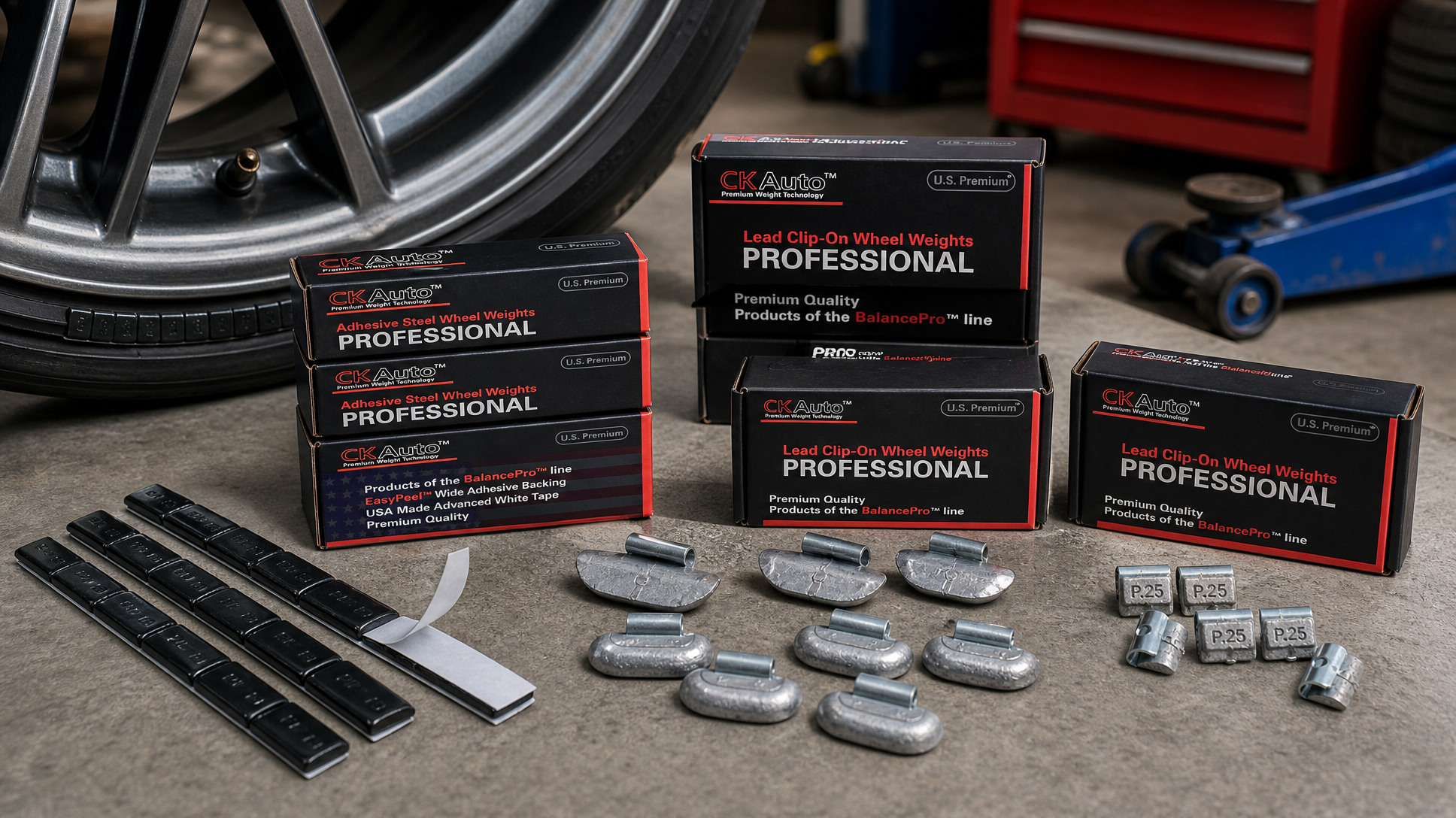
Clip-on weights clamp over the rim flange and have been the standard for steel wheels for decades. CKAuto's P Style clip-on range covers the increments a technician actually needs: the CKAuto P Style 1/4Oz Lead Clip On Wheel Weights for fine-tuning small imbalances, the CKAuto P Style 3/4Oz Lead Clip On Wheel Weights for mid-range corrections, and the CKAuto P Style 1Oz Lead Clip On Wheel Weights for heavier corrections. Having all three increments on hand means you're not improvising with the wrong size.
The quality of the weights matters more than most people think. A weight that doesn't hold — whether the adhesive fails or the clip doesn't grip the flange firmly — puts you right back where you started. Cheap weights that fall off a week after a balance job aren't saving anyone money.
A quick checklist before your next balance job
- Inspect all four wheels visually for missing weights — you can often see the adhesive ghost left behind where one fell off.
- Check for obvious rim damage: flat spots, bends, or cracks near the flange.
- Note when you last rotated your tires and how many miles since the last balance.
- Make sure you have the right weight type for your rim style — adhesive for alloys, clip-on for steel.
- Stock multiple increments so you can dial in the exact correction the balancer calls for.
Rebalancing is one of the cheapest, fastest fixes in vehicle maintenance. The frustrating part is usually not the job itself — it's not having the right weights on hand when you need them, or using weights that don't stay put.
Browse CKAuto wheel weights at Carkart and stock up on the adhesive and clip-on weights you need before your next balance job. And if you're sourcing other parts for a maintenance session, check out our guide on how to buy replacement auto parts online without getting the wrong fit — the same careful approach applies here.
Frequently Asked Questions
What's the difference between wheel balancing and wheel alignment?
Wheel alignment adjusts the angles at which your tires contact the road — it's about direction and geometry. Wheel balancing corrects uneven weight distribution around the tire-and-wheel assembly so it spins without wobble. Both affect handling and tire wear, but they're separate services that fix different problems. A vibration at highway speed is almost always a balance issue; pulling to one side is more likely alignment.
Can I drive with an unbalanced wheel?
You can, but it's not a good idea to leave it long-term. Persistent imbalance accelerates tire wear, puts extra stress on wheel bearings and suspension components, and makes highway driving genuinely uncomfortable. The longer you leave it, the more it can compound into a bigger repair bill.
How often should I have my wheels rebalanced?
A common guideline is to rebalance every time you rotate your tires, since wear changes the mass distribution of the tire. It's also worth rebalancing any time you notice new vibration, after hitting a significant pothole or curb, and whenever you fit new tires or wheels.
Do adhesive wheel weights work as well as clip-on weights?
Yes — when properly applied to a clean, dry rim surface, quality adhesive weights hold reliably. They're actually the preferred choice for alloy wheels because they sit on the inside face of the rim and don't risk scratching or marring the visible outer edge. Clip-on weights are still the standard for steel wheels and some performance applications where the flange design suits them. The key with either type is surface prep and weight quality.