Cart
0
Nothing turns a summer commute into a misery session faster than reaching for the AC dial and getting a face full of warm air. The instinct is to panic — compressor replacement, refrigerant recharge, a four-figure repair bill. But nine times out of ten, the real culprit is something far less dramatic. The trick is working through the possibilities in the right order, cheapest and simplest first, before you commit to anything.
Here's a logical diagnostic sequence you can actually use.
1. Check the Controls First
This sounds obvious, but broken or slipping HVAC knobs are one of the most overlooked causes of poor climate control — especially on trucks that have seen some mileage. If the temperature knob has cracked, stripped internally, or lost its detent, it may not be rotating the blend door shaft far enough to call for cold air. You turn what feels like "full cold" and the door never actually gets there.
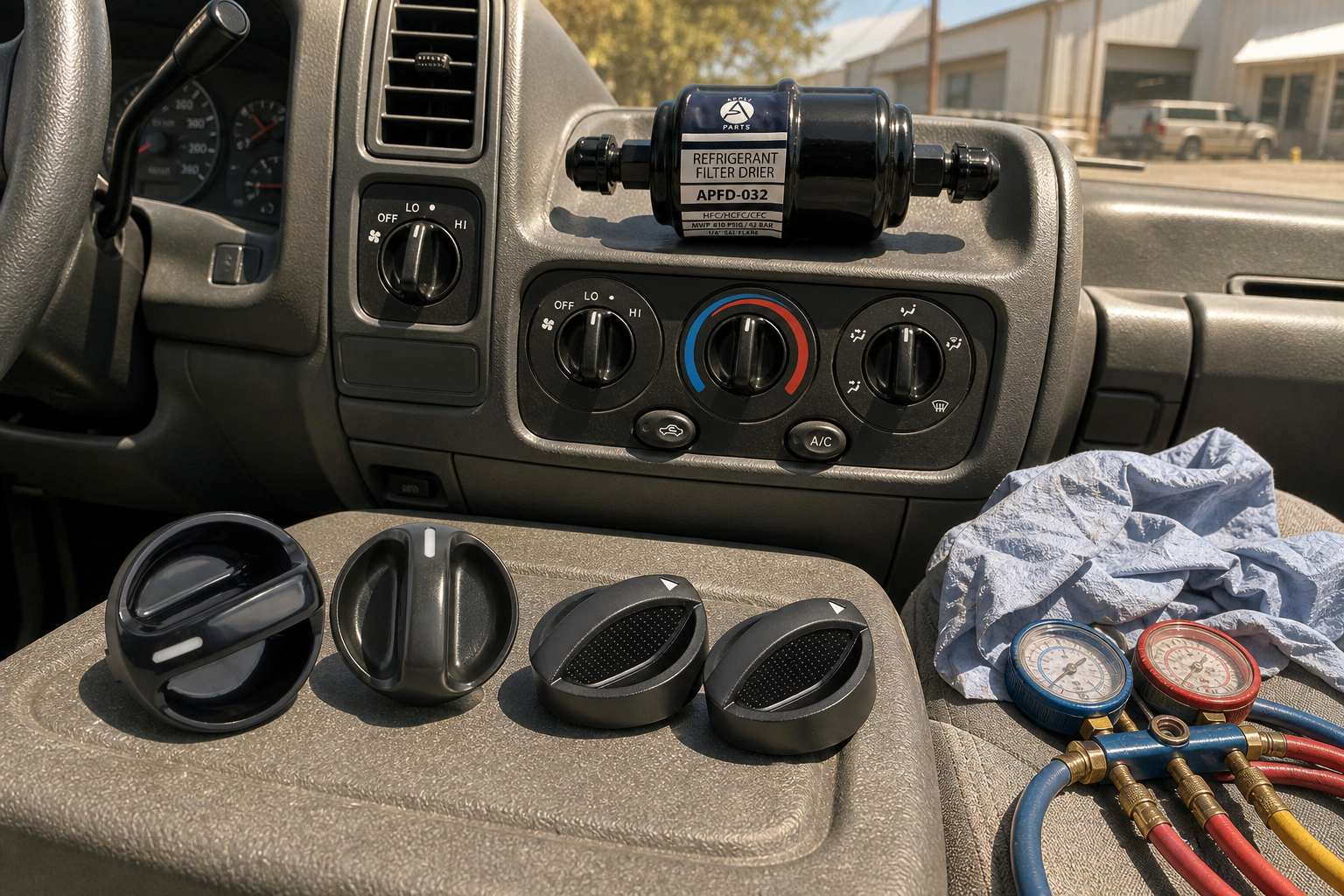
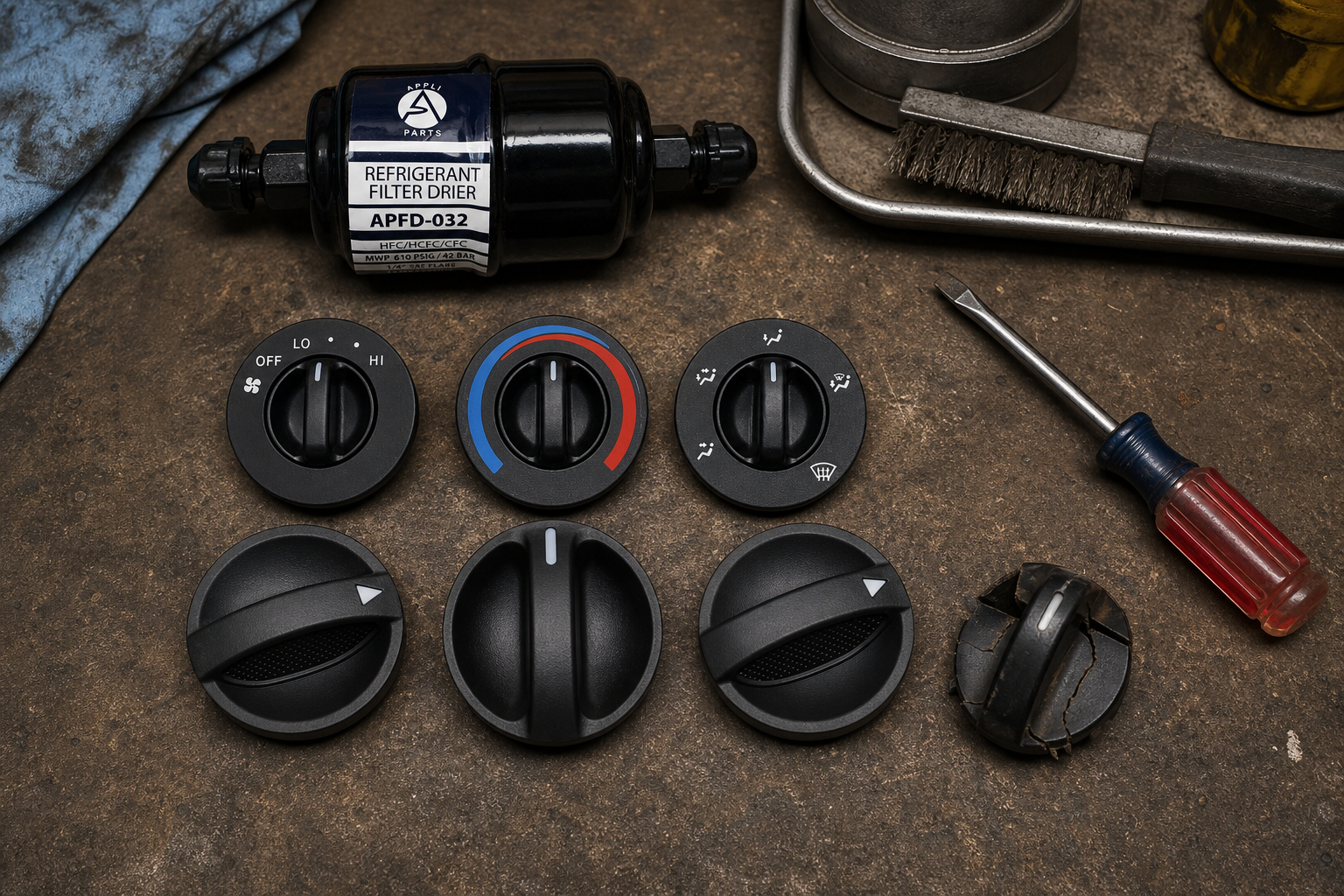
On older Toyota Tundras and Tacomas in particular, the original plastic knobs are notorious for wearing out. The Danbojit 3 Pack Tundra Climate Control Knob (Model 55905-0C010) is a metal replacement set designed for 2000–2006 Toyota Tundra owners dealing with exactly this. Similarly, the Tacoma HVAC Heater Control Knob (65551820A / 758695) and the Danbojit 3 Pack Control Knob Fan Heater (Model 65551820A) are purpose-built metal replacements for 2005–2011 Toyota Tacoma blower, temperature, and airflow dials. The knobs in the photos show a solid, textured construction with clear indicator marks — a meaningful upgrade over the originals that can crack and slip over time.
Before you book a diagnostic appointment, physically inspect every HVAC knob. Try rotating each one with firm, deliberate pressure and watch whether it actually moves the underlying shaft or just spins loosely. A knob that turns without resistance — or one that wobbles — is your first suspect.
2. Look at the Cabin Air Filter
A completely clogged cabin air filter restricts airflow so severely that the evaporator can ice over, which paradoxically makes the air coming out feel warm and weak at the same time. Pull it out and hold it up to the light. If you can't see daylight through it, replace it. This is a five-minute job on most vehicles and costs next to nothing.
3. Suspect the Refrigerant Circuit
If the controls are fine and airflow is strong but the air is still warm, the refrigerant circuit is the next place to look. Low refrigerant charge is the classic cause — but low refrigerant is almost always a symptom of a leak, not a standalone problem. Simply topping it off without finding the leak means you'll be back in the same spot in a few months.
One component that often gets skipped in this conversation is the filter drier. The Appli Parts APFD-032 Refrigerant AC Filter Drier is a compact, inline unit with 1/4-inch SAE flare connections, rated for HFC, HCFC, and CFC refrigerants. Its job is to absorb moisture and filter debris from the refrigerant before it reaches the expansion valve and evaporator. When a filter drier becomes saturated or restricted, it creates a pressure drop that mimics low charge — the system runs but can't cool properly. If the AC system has been opened for any repair (a line replacement, a compressor swap, even just recharging after a significant leak), the filter drier should be replaced as a matter of course, not an afterthought.
Checking for low refrigerant requires a set of manifold gauges. If you're not comfortable with that, a shop can do a pressure test quickly — but at least going in knowing the filter drier's age and condition gives you something specific to ask about rather than just handing them a blank check.
4. Check for a Stuck or Broken Blend Door
The blend door is a small flap inside the HVAC box that mixes hot and cold air to hit your target temperature. When the actuator motor fails or the door itself breaks, it can get stuck in the heat position — meaning no matter how cold you set the dial, the system is physically mixing in full heater output. You'll often hear a clicking or knocking from behind the dashboard when this happens, especially when you first adjust the temperature.
This is a more involved repair, but diagnosing it is straightforward: if the blower is strong, the refrigerant charge is correct, and the knobs are functioning, a stuck blend door is the next logical suspect. On many vehicles it's a DIY repair with a replacement actuator motor and a few hours of dash disassembly.
5. Rule Out the Compressor Last
The compressor is the most expensive component in the AC system, which is exactly why it should be the last thing you replace — not the first. With the engine running and the AC on, listen for the compressor clutch engaging (a distinct click followed by a slight change in idle). If the clutch isn't engaging at all, it could be a low-pressure lockout from a refrigerant leak rather than a dead compressor. Fix the leak and recharge first; the compressor may be fine.
A compressor that runs but produces no pressure difference between high and low sides is genuinely failed. But that's a conclusion you reach after ruling out everything above — not where you start.
The Right Diagnostic Order Saves You Money
Knobs → cabin filter → filter drier and refrigerant → blend door → compressor. That sequence costs you almost nothing to work through on your own, and it gives you real information before you're sitting across from a service advisor. Even if you end up needing a shop for the refrigerant work, knowing your knobs are solid and your filter drier is fresh means you're not paying labor on parts that didn't need touching.
Browse our Air Conditioning Tools & Equipment collection and Accessories & Parts at Carkart to find filter driers, HVAC control knobs, and more — shipped free across the USA. And if you're still unsure which part fits your vehicle, this guide on buying replacement parts online without getting the wrong fit is worth a quick read before you order.
Frequently Asked Questions
Can a bad HVAC knob really cause the AC to blow warm air?
Yes. If the temperature or mode knob has stripped internally or cracked, it may not be rotating the blend door shaft to the correct position. The knob feels like it's on "full cold" but the door never fully opens to the cold side. Replacing worn or broken knobs — especially on high-mileage trucks — is one of the simplest and cheapest fixes to check first.
How do I know if my AC filter drier needs replacing?
The filter drier should be replaced any time the AC system is opened to the atmosphere — after a line repair, compressor replacement, or significant leak — because moisture enters the system during that window. A saturated or restricted drier can cause poor cooling that looks exactly like low refrigerant. If you don't know when it was last changed and the system has had any work done, replacing it is cheap insurance.
What's the difference between low refrigerant and a failed compressor?
Low refrigerant typically triggers a low-pressure cutout switch that prevents the compressor clutch from engaging — so the compressor itself may be perfectly healthy. A genuinely failed compressor will engage but produce no meaningful pressure difference between the high and low sides. Checking refrigerant pressure with manifold gauges before condemning the compressor can save you from an unnecessary and expensive replacement.
Is it safe to keep driving with the AC blowing warm air?
In most cases, yes — a warm-blowing AC doesn't mean the car itself is unsafe to drive. However, if the warm air is accompanied by unusual smells, dashboard warning lights, or noises from the engine bay, get it checked sooner rather than later. A refrigerant leak left unaddressed can eventually damage the compressor through lack of lubrication, turning a small repair into a large one.